Mold Remediation in San Diego
Address the moisture. Remediate the affected area. Repair what comes next.
Found suspected mold behind a cabinet, around a leak, or inside a damaged wall? CCR Construction and Restoration remediates mold damage for San Diego property owners with our own in-house crews, then handles the repairs that follow.
We evaluate the affected area, test when the project calls for it, explain the proposed scope, and plan the work from remediation through reconstruction. You get a clear next step before work begins.
Have active water damage too? Our emergency phone line is answered 24/7.
- California B license #813685
- IICRC Certified Firm #209289
- IICRC-certified AMRT staff
- Restoration through reconstruction
- Office hours 7:30am–4:30pm · emergency line answered 24/7
Suspect Mold in Your Home or Building?
Mold concerns often start with something small: discoloration beneath a sink, a persistent musty smell, or a stain that returns after painting. Sometimes the problem becomes visible only when a leak repair opens a wall.
An assessment may be appropriate when you notice:
- Suspected growth on walls, ceilings, cabinet bases, or other building materials.
- A musty odor that persists without an obvious source.
- Recurring staining or dampness near plumbing or a previous leak.
- Materials that remained wet after water damage.
- Suspected growth uncovered during repairs or remodeling.
An odor or stain alone does not establish the extent of a mold problem. The affected materials and moisture conditions need to be evaluated together.
What Does Mold Remediation Involve?
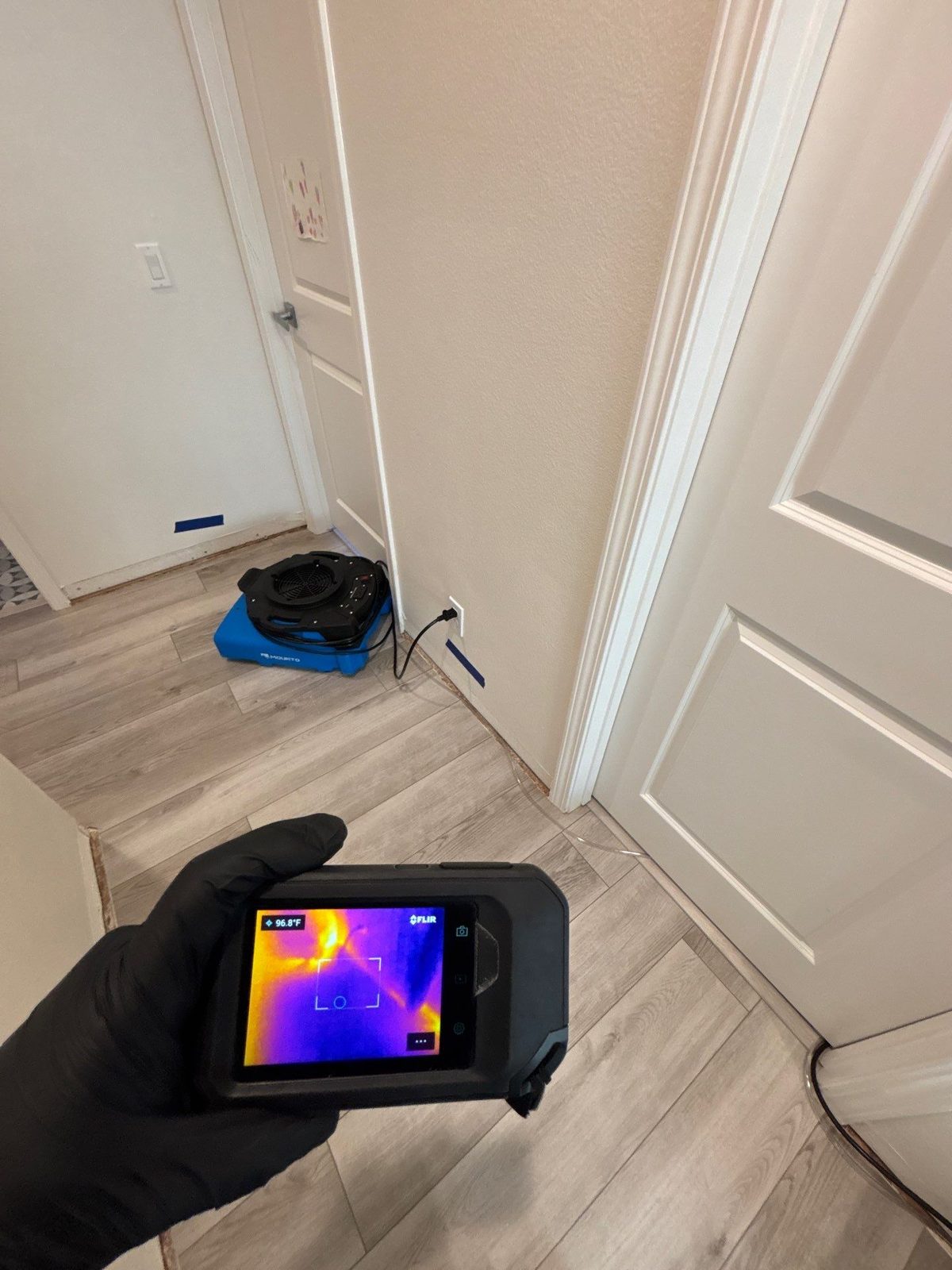
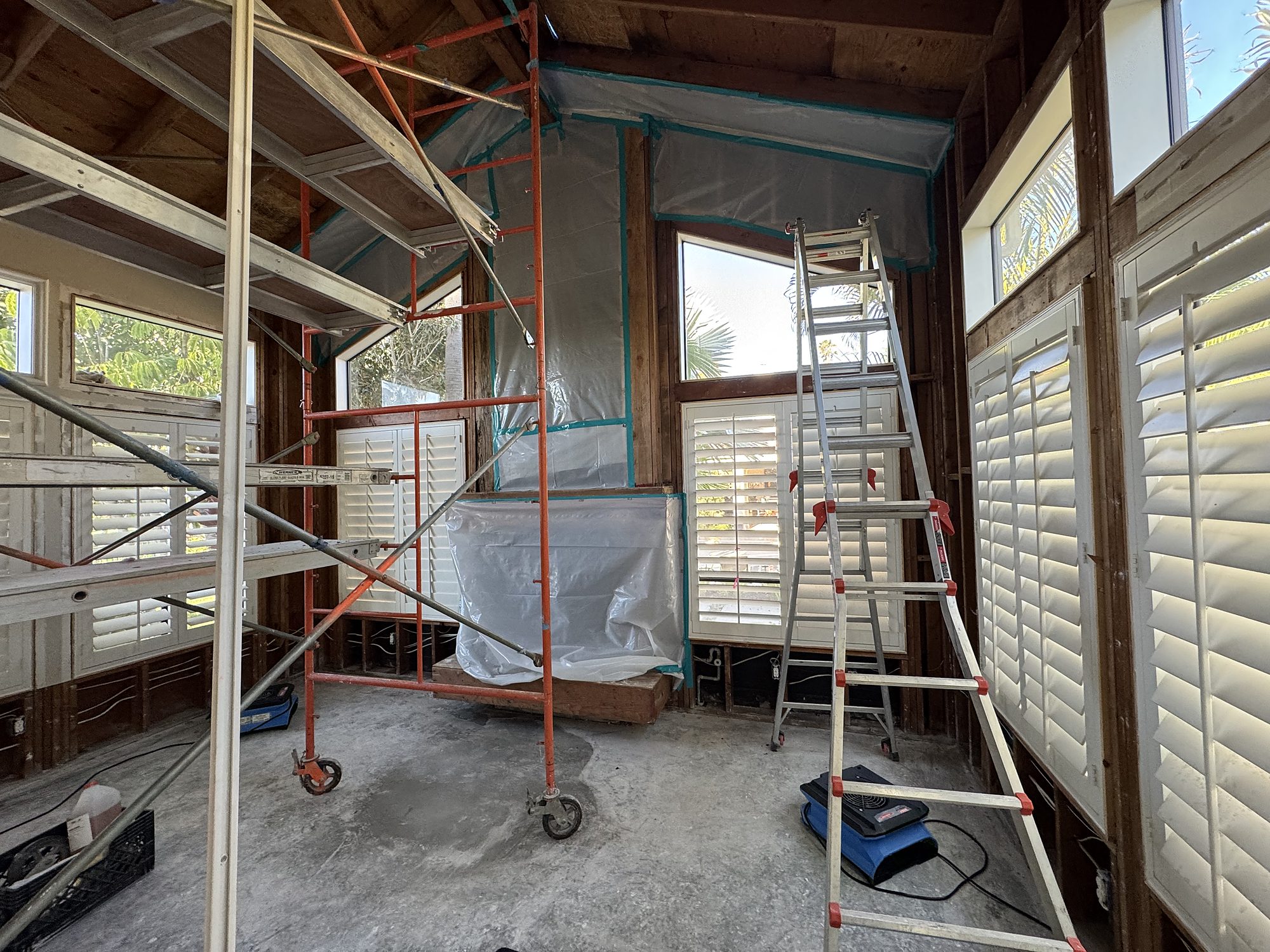
Mold remediation addresses affected materials and the moisture conditions that allowed growth. Depending on the project, it can include containment, removal of unsalvageable materials, cleaning, drying, and repairs.
The scope depends on what is affected, how accessible it is, and whether moisture is still entering the building.
From Moisture Assessment Through Repairs
Evaluate the Affected Area
We review visible damage and moisture conditions to help establish the work needed. Pre-remediation testing is available when the project calls for it. If concealed areas require further investigation, we explain that before expanding the scope.
Address the Moisture Source
A plumbing leak, roof leak, or other moisture problem needs to be addressed as part of the overall plan. We identify which repairs are included in our scope and which may require another qualified trade.
Plan Containment and Material Removal
The work plan identifies how the affected area will be separated from surrounding spaces and which materials can be cleaned or need removal. Containment and air-control methods are selected for the conditions of the job.
Clean and Dry the Affected Structure
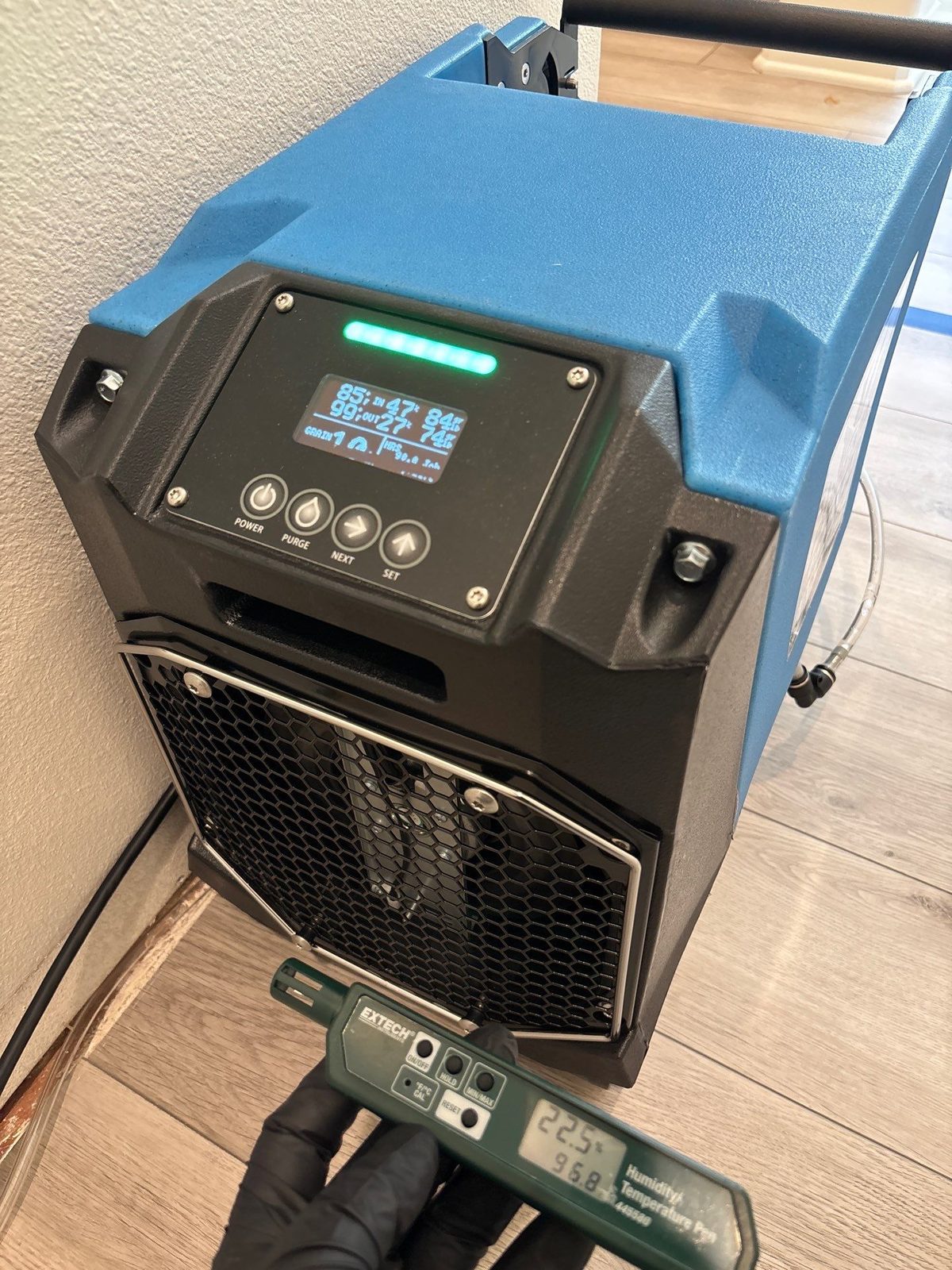
Our in-house crews remove damaged porous materials, clean remaining surfaces, and dry affected building materials as the agreed scope requires, using methods and equipment matched to the conditions of the job.
Review Completion Before Rebuilding
We review the completed work and moisture conditions before closing affected areas. Post-remediation clearance testing is used to verify the remediation before reconstruction begins.
Repair the Building
Once the area is ready, reconstruction may include drywall, insulation, cabinets, flooring, paint, and related finishes. We explain what is included so you can plan for the full project.
Why Choose CCR for Mold Damage and Repairs?
Mold remediation can leave more than an empty work area. It may leave a wall to rebuild, flooring to replace, or a kitchen that needs to be put back together.
CCR performs mold remediation in-house and provides the reconstruction that follows, so one team carries the work from containment through finished repairs. Our goal is to make the work understandable: what is affected, what needs attention, and what it will take to restore the space.
- Restoration and reconstruction planning.
- A defined scope of work and communication about changes.
- Documentation of affected building materials.
- A family-owned San Diego contractor since 1999, familiar with property-damage repairs.
- IICRC-certified Applied Microbial Remediation Technicians (AMRT) on staff.
- Pre-remediation and post-remediation clearance testing.
- California B license #813685 and an IICRC Certified Firm (#209289).
Mold Damage and Insurance Documentation
Do not assume mold work will be covered by insurance. Ask your carrier to review the cause of the damage and your policy’s applicable coverage, exclusions, limits, and deductible.
CCR can document observed damage and the proposed work for your review and, when applicable, your adjuster’s review. Your insurer determines coverage.
Mold Remediation Across San Diego County
We serve all of San Diego County, from Oceanside and Fallbrook south to the border. Contact CCR to discuss suspected mold at your property. Share your ZIP code, the affected area, and any known leak or water-damage history so our team can discuss the next step.
Mold often follows a leak. If water is still active, see our water damage restoration page or call the emergency line. For other questions, visit our contact page.