Fire & Smoke Damage Restoration in San Diego

After a fire, most property owners get handed off two or three times. One company boards up the building, another cleans the smoke, and a general contractor eventually rebuilds. CCR Construction and Restoration does all of it in house.

We are an IICRC-certified firm with four certified technicians on staff, and we have been restoring fire-damaged homes, retail spaces, and commercial buildings across San Diego County for over twenty years. Because reconstruction is the majority of our business, we do not clean your building and then leave you to find a contractor. The same team that secures the property on the first night hands it back to you finished.

We work directly with your insurance carrier throughout, and we are available 24 hours a day.

Get Help Now!

By submitting my data I agree to be contacted

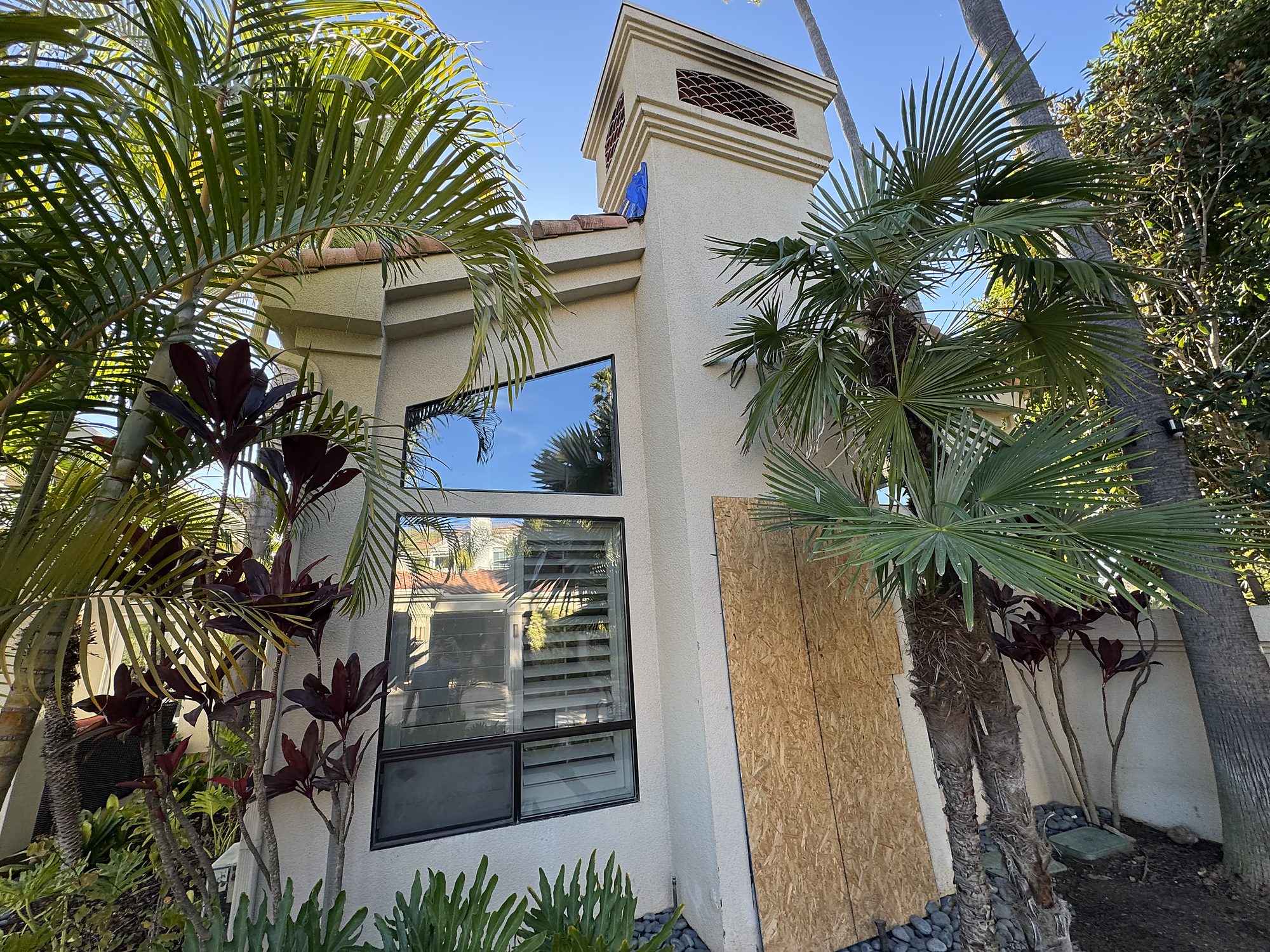
Boarded window opening and tarped chimney chase after a residential fire in San Diego

One Contractor From Board-Up Through Rebuild

Smoke, Soot, and Odor

Not all smoke damage is the same, and treating it as though it is will leave residue and odor behind.

  • Dry smoke from fast, high-temperature fires leaves a powdery residue that can usually be cleaned.
  • Wet smoke from slow, smoldering fires leaves a sticky, pungent film that smears and sets if it is handled incorrectly.
  • Protein residue from kitchen fires is nearly invisible but carries a strong, persistent odor and discolors paint and finishes.

Each type requires a different cleaning method and a different sequence. We treat odor at its source rather than masking it, using a combination of cleaning, sealing, and air treatment appropriate to the loss.

  • Structural cleaning of framing, subfloor, and remaining finishes
  • HVAC and ductwork evaluation, so soot is not redistributed through the building
  • Salvageable finishes cleaned and sealed, unsalvageable materials removed and documented

Soot is corrosive. Left on metal, appliances, and electronics it continues to etch and stain long after the fire is out, which is why the order of operations matters as much as the cleaning itself. We scope what can be restored and what has to be replaced, and we document both for your adjuster.

Water Damage From Firefighting

This is the part most property owners do not expect. Suppressing even a moderate structure fire can put thousands of gallons of water into a building, and that water does not stop causing damage when the fire is out. Left in place, it saturates framing and drywall and can produce mold growth within days, creating a second and entirely separate problem on top of the fire.

Because we perform water mitigation in house, extraction and structural drying begin as part of the same response instead of waiting on a second vendor.

If your building predates 1980, materials disturbed during demolition may contain asbestos or lead. Testing and abatement are performed by licensed specialists, and we manage that process as part of the mitigation phase so it does not stall your rebuild.

Our fire restoration process:

Secure the structure – Board-up, tarping, and stabilization so no further loss occurs.

Stop the water – Extraction and structural drying of suppression water before mold develops.

Scope and document – A full inventory of damage, photographed and written for your carrier.

Clean and deodorize – Soot removal matched to the residue type, and odor treated at its source.

Rebuild – Framing, drywall, finishes, and final walkthrough, by the same company that started the job.

24/7 Emergency Fire Response Across San Diego County

Fires do not wait for business hours, and neither does the damage that follows one. CCR responds around the clock across San Diego County, to homes and commercial buildings alike.

Our emergency response includes:

  • Board-up and tarping to secure the structure against weather, animals, and trespass, performed by our own crews.
  • Site stabilization so the building is safe to enter and work in.
  • Water extraction and structural drying to stop secondary damage from suppression water.
  • Documentation for your carrier, photographed and recorded from the first visit.

Securing the property quickly also satisfies the duty to mitigate in your policy, which protects the claim itself.
Our team responds with the equipment and certifications to:

  • Board up and secure openings, including large commercial elevations
  • Extract standing water and set structural drying equipment
  • Remove unsalvageable and hazardous debris
  • Contain affected areas so soot and dust do not spread into clean space
  • Begin carrier documentation from the first visit

No matter the size of the loss, CCR is equipped to stabilize the property and begin restoration immediately.

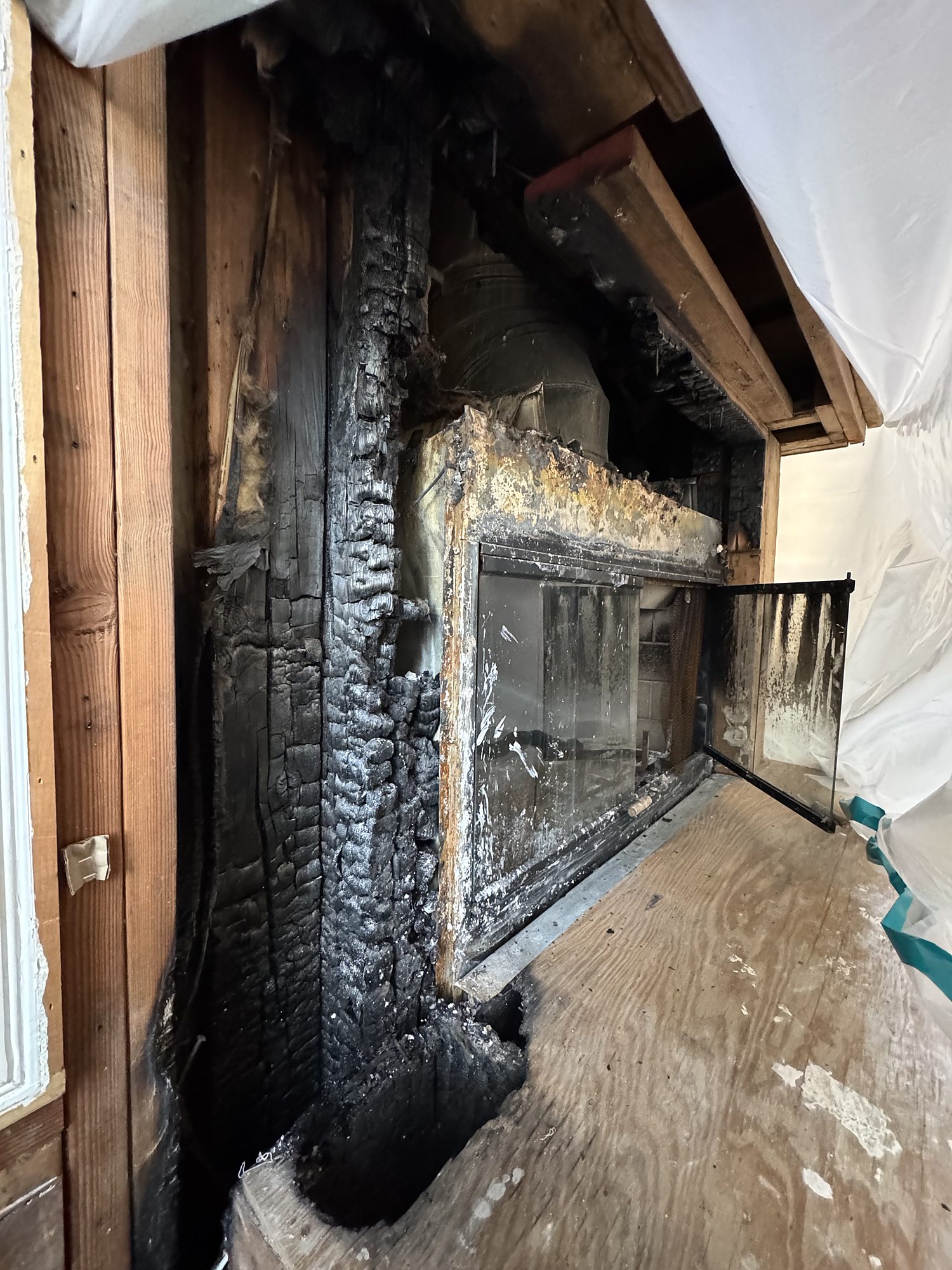
Charred framing around a fireplace and firebox after a residential chimney fire in San Diego
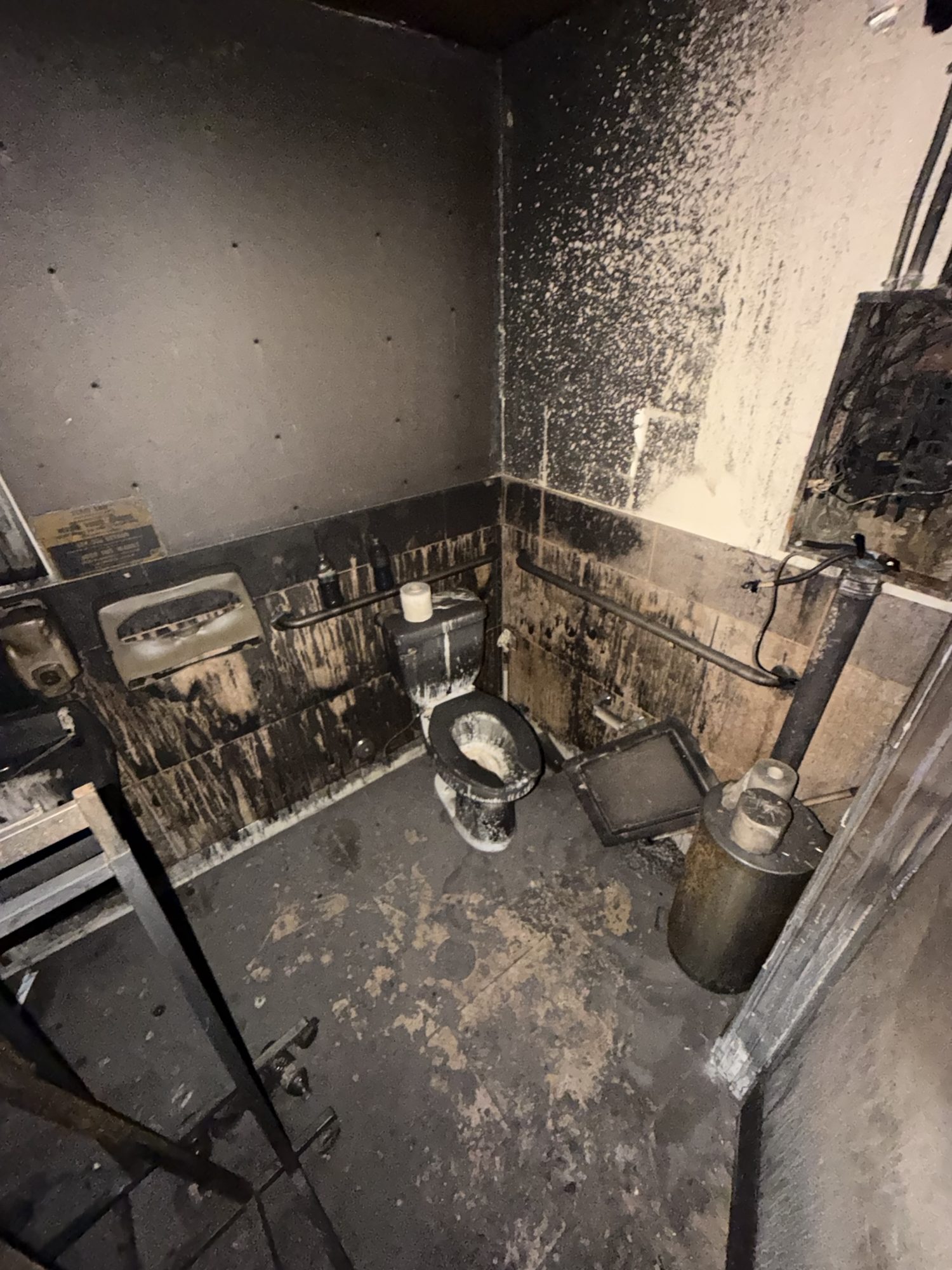
Heavy soot deposition on restroom walls and fixtures after a commercial fire in San Diego

Why San Diego Property Owners Choose CCR After a Fire

  • An IICRC-certified firm. Four certified technicians on staff, with credentials across water, fire, and structural restoration.
  • Over twenty years in San Diego. Founded in 2001, family owned and operated.
  • Large-loss capability. We handle major fire losses, not only small kitchen and garage fires.
  • We know the claims process. We document, scope, and communicate with adjusters in the format carriers expect, which is usually what determines how quickly a claim moves.
  • Reconstruction is our core business. Most restoration companies stop at cleanup. We rebuild.
  • Approved vendor on more than ten insurance carrier programs. We are not permitted to name them here, but adjusters know us.
  • Multiple-time Top Performer and Golden Hammer award winner. Both are scored on service, quality, and communication.
  • Licensed, bonded, and insured. California contractor’s license #813685.

Expertise & Experience – Over 20 years restoring fire, smoke, and water losses in San Diego County

IICRC-Certified Firm – Four certified technicians on staff, across water, fire, and structural restoration

Fast Response – 24-hour emergency service to secure the property and limit further loss

Large-Loss Capability – Experienced on major fire losses, not only small residential fires

Insurance Claims Assistance – We work directly with your carrier and document in the format adjusters expect

Single Source – Mitigation and reconstruction under one contract, with one point of contact

What to Do in the First 24 Hours After a Fire

What happens immediately after the fire department leaves affects both your property and your claim.

  • Do not re-enter until the building is cleared. Structural damage and air quality hazards are not always visible.
  • Call your insurance carrier and open the claim.
  • Get the building secured. An unsecured structure is exposed to weather and theft, and carriers expect you to prevent further loss.
  • Do not attempt to clean soot yourself. Wiping wet smoke or protein residue drives it deeper into the surface and can turn a cleanable item into a replacement.
  • Leave the HVAC system off until it has been evaluated, or you will distribute soot throughout the building.
  • Photograph everything before anything is moved.
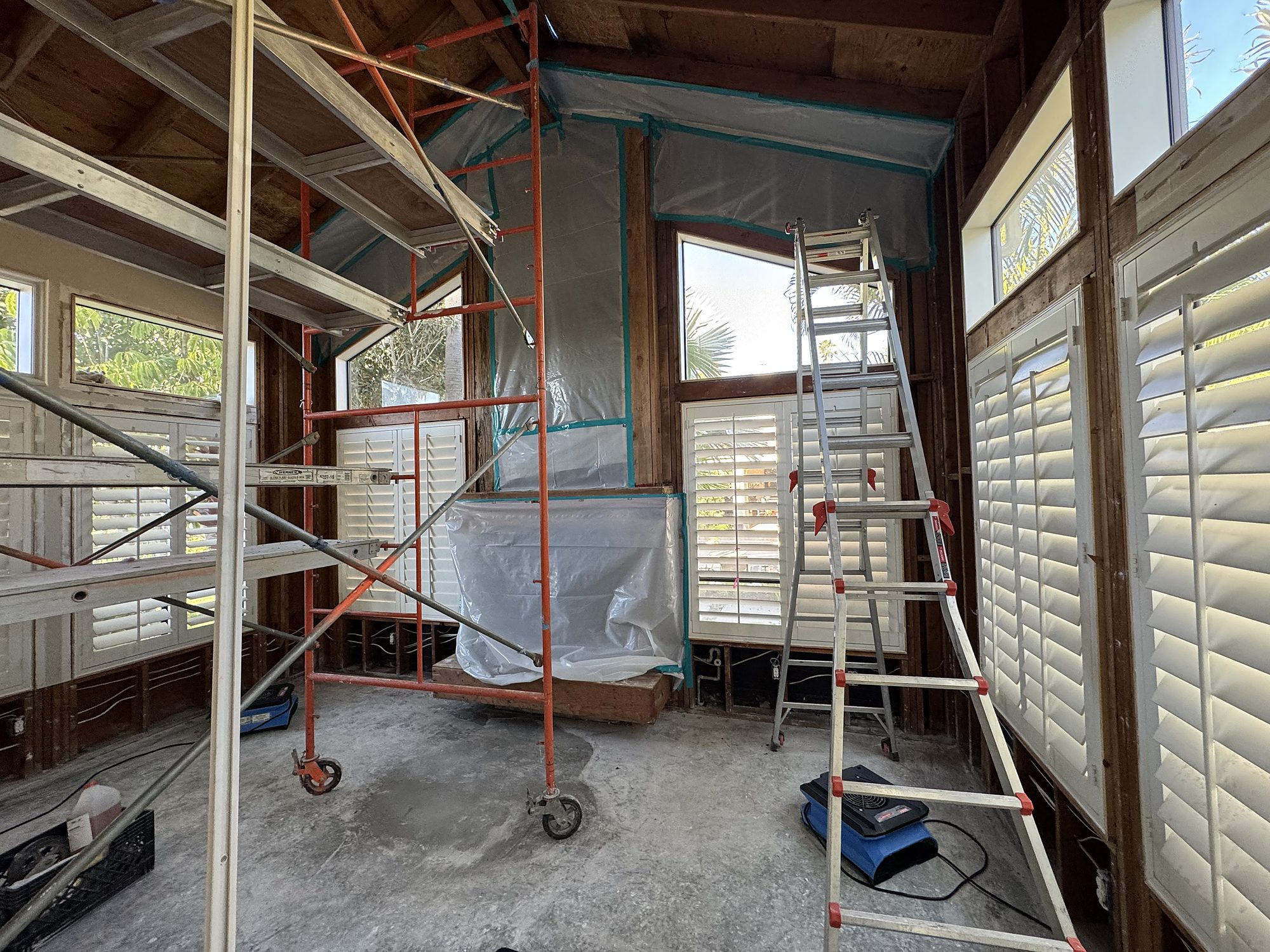
Containment barriers, scaffolding, and drying equipment set inside a San Diego home during fire restoration

Commercial Fire Damage: Retail, Office, and Multi-Tenant Buildings

A commercial fire is not simply a larger house fire. The building is one claim, your inventory and equipment are another, and the income lost while the doors are closed is a third. Reopening quickly is usually worth more than anything else on that list.

CCR handles commercial fire losses across San Diego County, including multi-tenant retail, office, and mixed-use buildings. That work includes securing storefronts and rear entries, coordinating with property managers and several tenants at once, and phasing reconstruction so unaffected units can reopen while work continues elsewhere in the building.

Because tenant improvements are already a core part of our business, we are performing commercial buildouts every week. A commercial fire rebuild is that same work, carried out under an insurance claim.
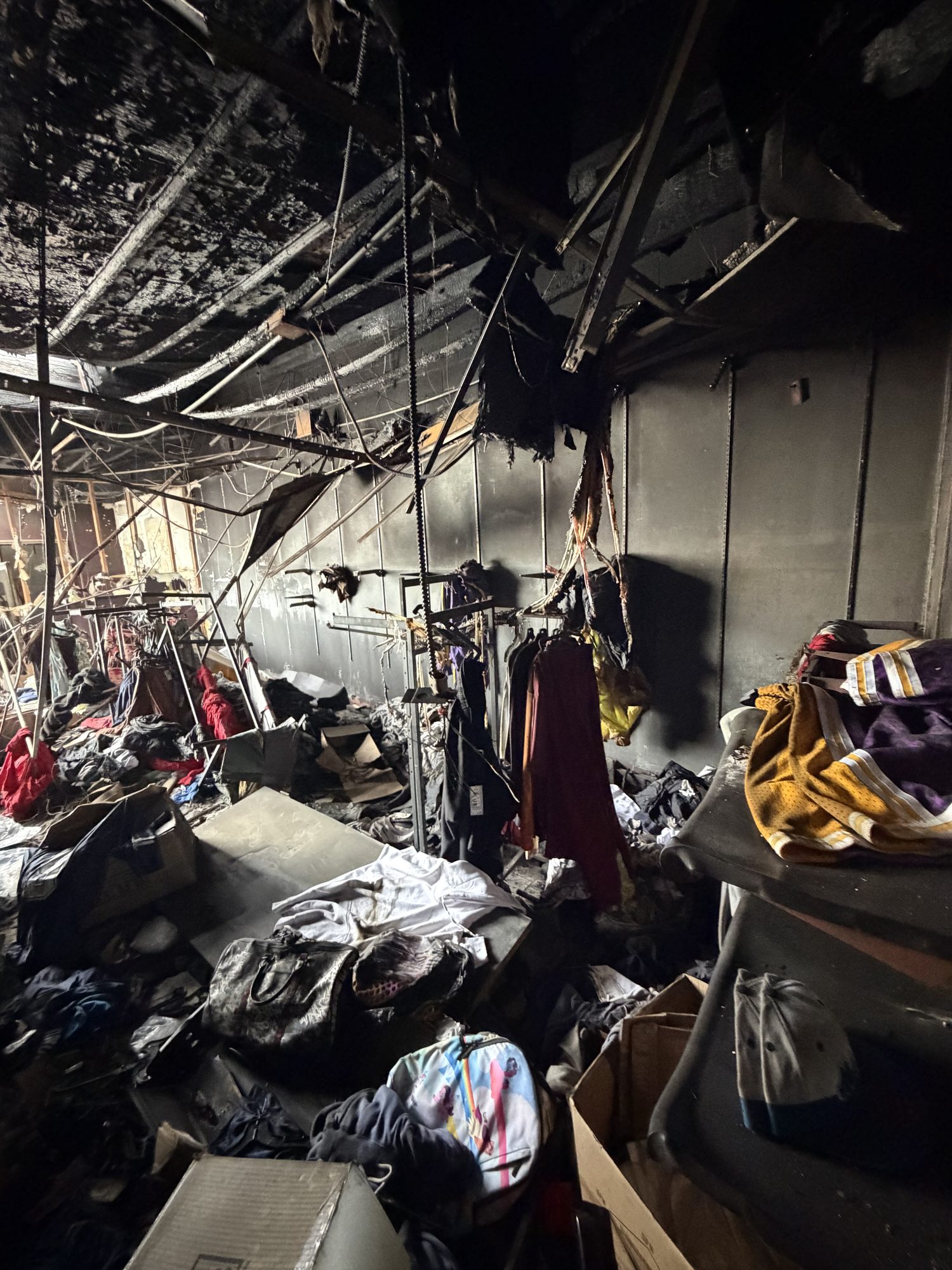
Collapsed ceiling and charred merchandise inside a fire-damaged San Diego retail space

Fire Damage Restoration: Common Questions

There are four phases and they run on very different clocks.

Emergency stabilization happens within hours of your call – board-up, securing the structure, and extracting suppression water.

Mitigation and structural drying typically runs several days to about two weeks, depending on how much water the fire department put into the building.

Scope approval with your carrier is usually the longest and least predictable phase. The estimate has to be written, submitted, and agreed before reconstruction can begin, and this is where most claims actually lose time.

Reconstruction depends entirely on extent. A contained kitchen fire is a different project than a structure with roof and framing loss.

We can give you a realistic timeline after the first walkthrough, once we know what the water did.

This is the question most people do not realize they need to ask, and the answer starts with how your policy is built.

Your dwelling and your personal property are two separate coverages with separate limits. They are about as distinct as your home policy and your auto policy. The building is one conversation with your carrier and your contents are another, and they are settled separately.

In practice, hard and non-porous items usually clean up well. Porous materials are the difficulty. Upholstered furniture, mattresses, soft goods, some plastics, and many children’s toys can hold smoke odor even after cleaning, and a portion of it cannot be brought back.

We attempt restoration first and document what cannot be saved for your contents claim, rather than discarding items on our own judgment. We work that way because it is your property, and because that documentation is what gets you paid for it.

Contents pack-out and cleaning is performed by a specialty vendor that we coordinate and manage.

Odor is the complaint that comes back months later, so on larger losses it gets verified rather than eyeballed. Testing happens at both ends of the job.

Before work begins, soot, char, and ash sampling establishes which combustion byproducts are present and how far they traveled. This matters because smoke moves through a building very differently than fire does, and it routinely deposits in rooms that never burned.

After work, post-remediation clearance testing confirms affected areas are clean before reconstruction closes them up. Sealing walls before verifying them is exactly how odor ends up trapped inside a finished house.

We treat odor at its source. Fogging or ozone on their own, without removing the residue first, only masks the problem temporarily.

Work performed through insurance claim and TPA (third-party administrator) programs generally carries a five-year workmanship warranty.

We confirm the specific warranty terms that apply to your claim in writing before work begins, so it is documented rather than assumed.

On a covered loss you pay your deductible, and your carrier pays the balance according to your policy limits. We bill the carrier directly.

The estimate is written in Xactimate, the same platform carriers and adjusters use. That matters more than it sounds: a scope written in the carrier’s own pricing platform can be reviewed and agreed rather than argued over.

Total cost depends entirely on scope – how far smoke traveled, how much water went in, and what has to be rebuilt. Any number quoted before a walkthrough is a guess, and we would rather not give you one.

What we can tell you before the walkthrough is what is typically covered, what is not, and where your policy limits are likely to matter.

Often yes, at least for part of the work.

Most homeowners policies include additional living expenses coverage, which pays for temporary housing while your home is uninhabitable. Whether you can stay depends on the extent of the damage, whether utilities are safe, and whether the affected areas can be sealed off from living space.

We will tell you honestly after the first walkthrough. Living in a house during active soot removal is usually not advisable.

We would advise against it.

Wet smoke and protein residue smear. Wiping them drives residue deeper into the surface and can turn a cleanable item into a replacement. Soot is also corrosive, and on metal, appliances, and electronics it keeps etching long after the fire is out.

Leave your HVAC system off until it has been evaluated. Running it circulates soot into parts of the building that were never affected, which makes the loss larger than it needed to be.

Photograph everything before anything is moved.

Yes, and it is worth knowing in week one rather than week six.

Materials disturbed during demolition may contain asbestos or lead, and testing is required before that work proceeds. Abatement is performed by licensed specialists, and we manage that process as part of the mitigation phase so it does not stall the rest of your rebuild.

This is one of the more common reasons a fire claim slows down unexpectedly.

Three coverages usually apply instead of two, and they are settled separately.

The building is covered under the property policy, much the way a dwelling is on a homeowners policy. Your business personal property – inventory, fixtures, equipment, and furniture – is a separate coverage with its own limit, and it is where retail and restaurant losses are usually largest. Business interruption covers income lost while you cannot operate, and it is frequently the coverage that matters most, because it is what pays your fixed costs while the doors are closed.

Business interruption is also usually time-limited, and that changes the priorities of the entire job. Getting you reopened is not a courtesy, it is what protects that part of your claim. Where a building has multiple tenants, we phase the work so unaffected units can reopen while restoration continues elsewhere.

If you are a tenant rather than the owner, your lease determines what you are responsible for versus the landlord. It is worth reading early, because it decides who coordinates what.

Contact CCR for Fire Damage Restoration in San Diego

If your home or building has been damaged by fire, the first hours matter. Call CCR Construction and Restoration at 858-397-2270 for 24-hour emergency response anywhere in San Diego County.

We will secure the property, stop the secondary damage, work with your carrier, and rebuild, with one team and one point of contact from the first call to the final walkthrough.

Get Help Now!

By submitting my data I agree to be contacted