Storm, Wind & Flood Damage Restoration in San Diego

San Diego does not get many storms, and that is precisely why storm damage tends to go badly here. Buildings are not detailed for sustained rain, roofs are often the last thing anyone inspects, and when an atmospheric river parks over the county for two days, water finds every gap that has been quietly sitting there for years.

CCR responds around the clock across San Diego County. We secure the building first, with our own crews, then dry what got wet and rebuild what broke, under one contract and one point of contact.

Get Help Now!

By submitting my data I agree to be contacted

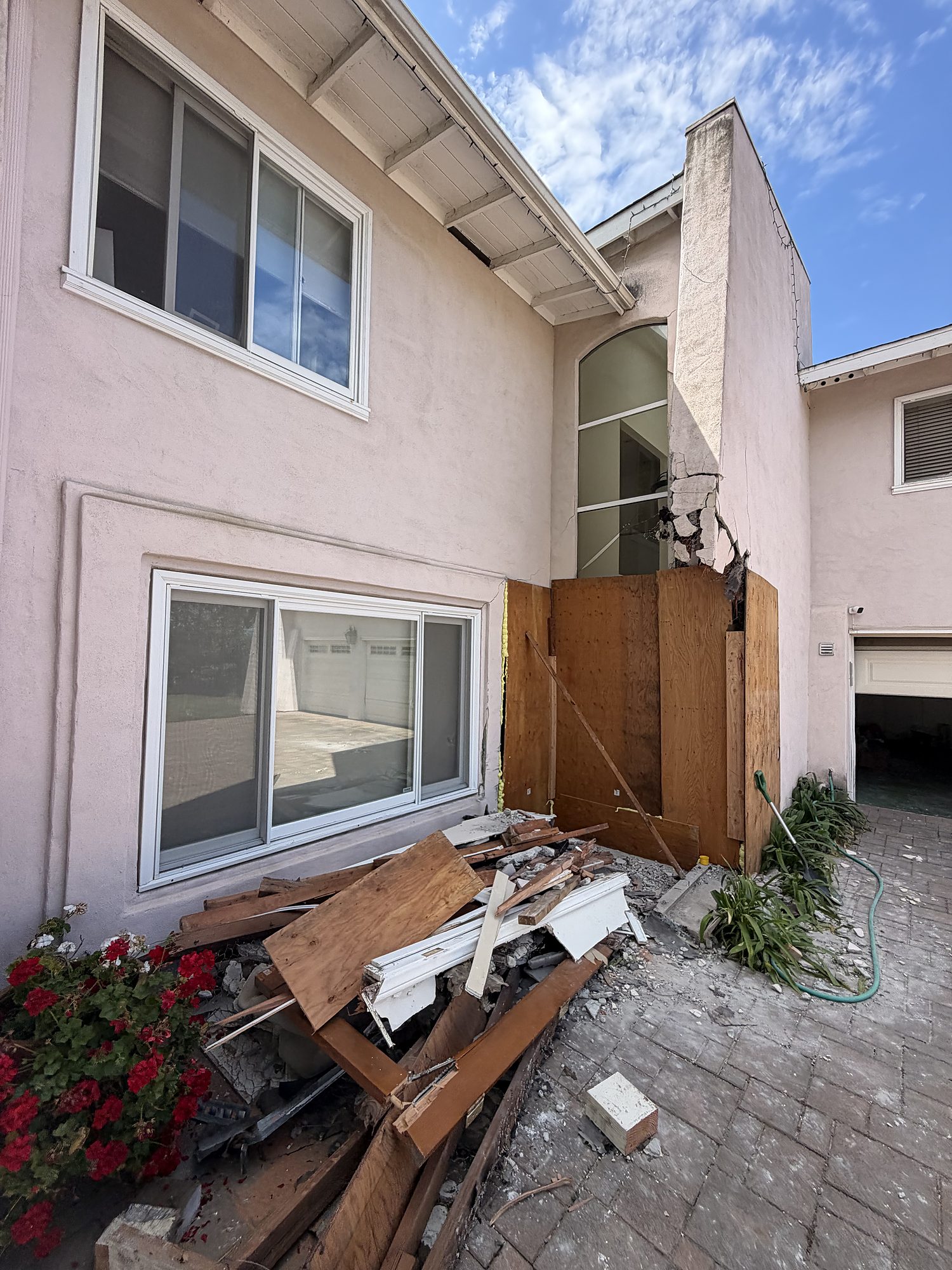
Emergency plywood board-up securing a damaged exterior wall opening at a San Diego property, with debris staged for removal

Emergency Board-Up and Roof Tarping

Securing the Building Comes First

An open roof or a broken window keeps letting weather in for as long as it stays open, so stabilizing the building is the most urgent work on the site.

We self-perform board-ups rather than subcontracting them. That includes:

  • Boarding broken windows, doors, and wall openings
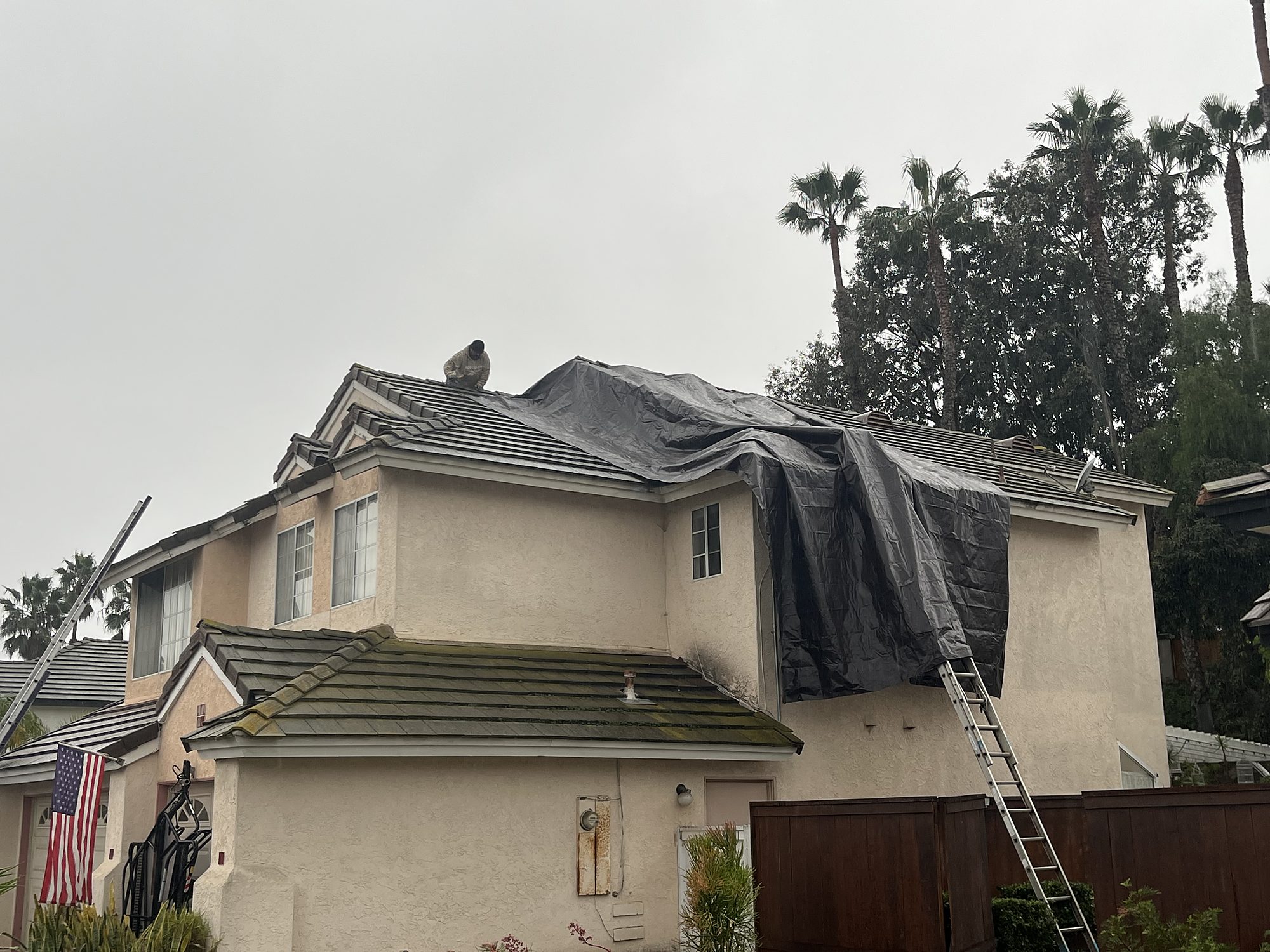
  • Roof tarping over failed, lifted, or torn-off sections
  • Securing commercial storefronts and rear entries
  • Barriers and temporary protection where the structure is not safe to occupy

Board-ups are not only about the building. Your policy requires you to prevent further damage once you know about it, and a carrier can reduce what it pays for damage that accumulated afterward. Closing the building up quickly protects the claim as much as it protects the property.

  • Emergency board-up and roof tarping, self-performed
  • Water extraction and structural drying
  • Debris removal and site cleanup
  • Roofing, framing, drywall, and finish repairs
  • Full reconstruction where the damage runs deeper

One company, one contract, from the night of the storm through the final walkthrough.

When a Storm Puts Water Inside the Building

Storm water is rarely clean by the time it is indoors. Water that has run across a roof, through insulation, or over a parking lot picks up contaminants on the way, and how contaminated it is determines what can be dried and what has to be removed.

Roof and window leaks are also deceptive. What shows on the ceiling is almost always smaller than what is wet above it. Water tracks along framing and reappears somewhere else entirely, so a visible stain is where the investigation starts, not where the damage ends.

We map the real extent with moisture meters before opening anything up, then dry to documented readings rather than to appearance.

The order of work matters as much as the work itself:

Secure – Board-ups, tarping, and making the structure safe so the loss stops growing.

Assess – Moisture mapping to find how far the water actually traveled, which is nearly always further than the visible stain.

Dry – Extraction and structural drying to documented readings, logged daily for your adjuster.

Rebuild – Roofing, framing, and interior finishes, restored to pre-loss condition.

Wind, Debris, and Structural Damage

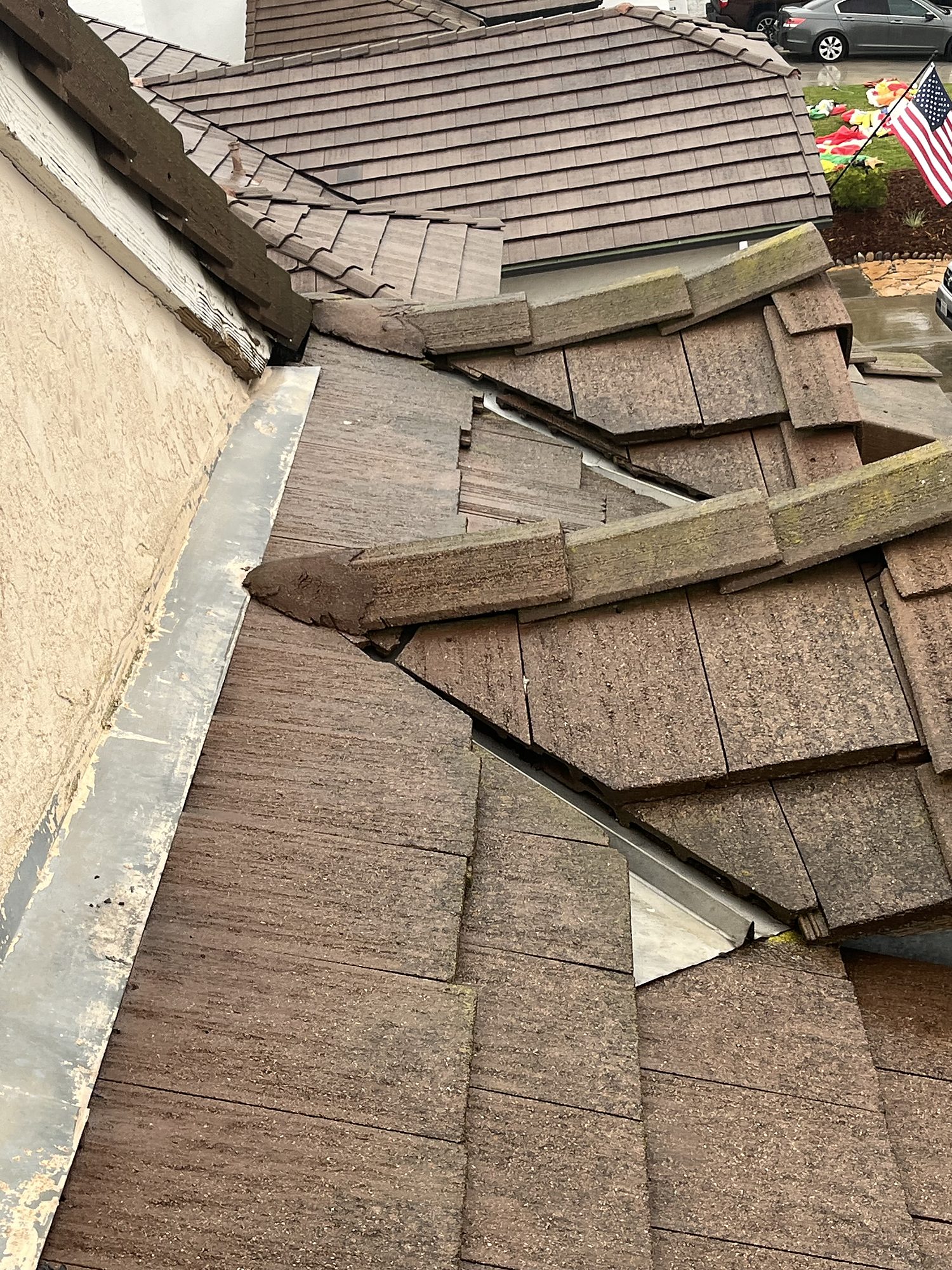
Wind damage in San Diego is usually less about the wind itself and more about what it finds already marginal: aging roof tiles, rooftop equipment, fencing, mature trees, and older windows and skylights.

We handle the resulting repairs in house, from roofing and framing through interior finishes. Because reconstruction is the majority of our business, storm work does not stop at cleanup and get handed off to a different contractor to finish.
Our crews respond with the equipment to:

  • Board and secure openings on homes and commercial elevations
  • Tarp compromised roof sections
  • Extract standing water and set drying equipment
  • Remove saturated and unsalvageable materials
  • Document the loss for your carrier from the first visit

Whatever the size of the loss, the first goal is the same: stop it from getting worse.

Emergency roof tarp installed over storm-damaged tile roofing on a San Diego home, with a technician securing it at the ridge
Displaced and cracked concrete roof tiles leaving the underlayment exposed after wind damage in San Diego

Why San Diego Property Owners Call CCR After a Storm

  • 24-hour emergency response. Storms do not arrive during business hours, and an open building cannot wait until Monday.
  • Our own board-up and tarping crews. Not subcontracted, so securing the building does not wait on another company’s schedule.
  • An IICRC-certified firm. Four certified technicians on staff, with credentials across water and structural restoration.
  • We know the claims process. We document and scope in the format carriers expect, which is usually what decides how fast a claim moves.
  • Reconstruction is our core business. Mitigation and rebuild under one contract.
  • Approved vendor on more than ten insurance carrier programs. We are not permitted to name them here, but adjusters know us.
  • Multiple-time Top Performer and Golden Hammer award winner. Both are scored on service, quality, and communication.
  • Licensed, bonded, and insured. California contractor’s license #813685.

Expertise & Experience – Over 20 years restoring storm, water, and fire losses across San Diego County

Own Crews for Emergency Work – Board-ups and tarping are self-performed, not subcontracted

Documented Drying – Daily moisture readings logged and provided to your adjuster

Insurance Claims Assistance – We work directly with your carrier and scope in the format adjusters expect

Single Source – Mitigation and reconstruction under one contract

What to Do First After Storm Damage

  • Stay clear of anything structural or electrical. Downed lines, saturated ceilings, and compromised framing are not safe to inspect yourself.
  • Photograph everything before moving it, including the outside of the building and any debris.
  • Call your carrier and open the claim.
  • Get the building secured. Board-up and tarping stop the loss from growing, and your policy expects you to act.
  • Do not climb on a wet roof to tarp it yourself. This is where people get hurt, and an improperly fastened tarp can tear more roofing loose than the storm did.
  • Keep receipts for anything you spend on emergency protection. It is usually reimbursable.
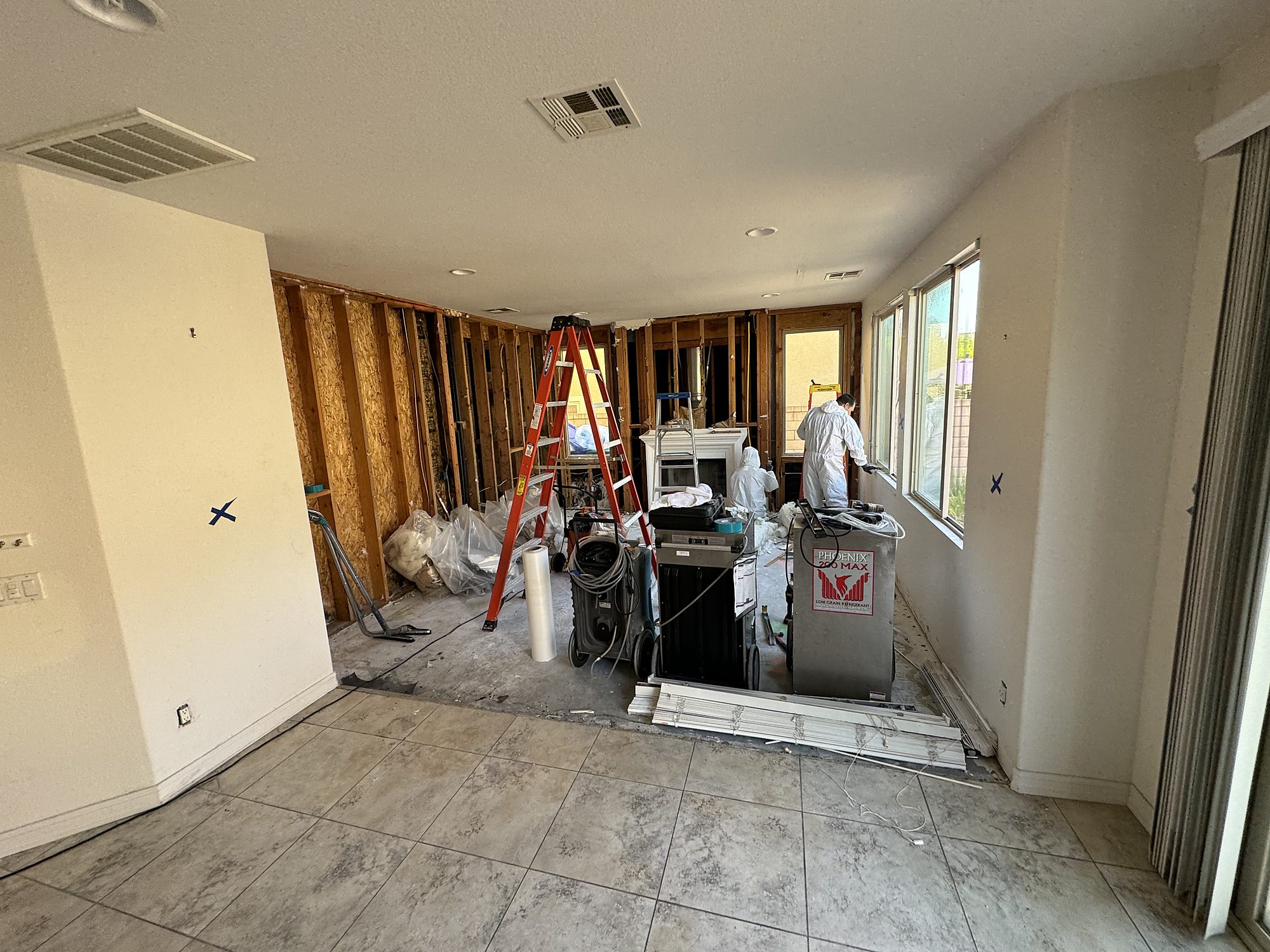
Living room opened to studs with dehumidification equipment running during water mitigation in San Diego

Storm Damage Restoration: Common Questions

Usually, but the answer depends on how the water got in, and that distinction catches a lot of people.

Wind damage and wind-driven rain entering through an opening the storm created – a torn-off roof section, a broken window – are generally covered by a standard policy.

Flood, meaning rising surface water from outside the building, is excluded from standard homeowners and commercial property policies entirely. That requires separate flood insurance, whether through the NFIP or a private carrier.

The same storm can produce both. Rain blowing through a hole in your roof and water rising across your floor from the yard are treated as two completely different events by your policy, even when they happen the same night.

It depends on whether the storm created the opening or simply found one.

If wind lifted or broke roofing and rain came through the resulting damage, that is generally covered. If the roof was already worn out, and the storm merely exposed a condition that had been developing for years, most carriers treat that as deferred maintenance and exclude it.

This is the most commonly disputed part of a storm claim. It is also why documentation from the first visit matters: photographs of the failure itself, not just the water stain on the ceiling, are what establish the cause.

It is worth understanding the risk rather than assuming.

Standard property policies exclude flood entirely, and you do not have to be in a mapped high-risk flood zone to flood. A large share of flood claims come from outside designated flood zones, often where drainage is overwhelmed rather than where a river rises.

We are restoration contractors and not insurance agents, so this is a conversation to have with your broker. But it is much better to have it in October than to discover the gap in February.

We respond 24 hours a day, and securing the structure is the first thing we do on site.

Board-up and tarping are self-performed by our own crews, which matters more than it sounds during a storm event. When a system moves across the county, every restoration company in San Diego is calling the same handful of board-up subcontractors on the same night. We are not waiting in that queue.

On a covered loss, emergency mitigation is generally part of the claim rather than something separate you absorb. Carriers expect you to secure the property, and they expect to pay reasonable, documented costs for it.

We photograph and document the emergency work from the first visit so it is supported when the claim is scoped. Keep receipts for anything you spend yourself on temporary protection, because that is usually reimbursable too.

We would strongly advise against it.

A wet roof after a storm is one of the most common places people are seriously injured, and the roof is likely already structurally compromised where the damage is.

Beyond the safety issue, a tarp fastened incorrectly can tear more roofing loose in the next gust than the original storm removed, turning a contained repair into a much larger claim. Improvised repairs can also complicate the coverage question by making the original cause harder to establish.

The same thing that happens with any water loss: it has to be found and dried, not covered up.

Water from a roof or window failure travels along framing and pools where you cannot see it. We map the actual extent with moisture meters rather than working from the visible stain, then dry to documented readings and log those readings daily for your adjuster.

If wet materials get closed up behind new drywall, you get a mold problem several weeks later, and it becomes a second claim.

Securing the building happens the same day. Drying typically runs three to five days depending on how much water came in and how far it traveled.

The unpredictable phase is carrier approval of the repair scope, which has to be written, submitted, and agreed before reconstruction starts. After a countywide storm event this often takes longer than usual, simply because adjusters are handling a surge of claims at once.

Reconstruction itself depends on what has to be rebuilt. We can give you a realistic timeline after the first walkthrough.


Contact CCR for Storm Damage Restoration in San Diego

If wind, rain, or flooding has damaged your home or building, the first priority is getting it closed up. Call CCR Construction and Restoration at 858-397-2270 for 24-hour emergency board-up, tarping, and storm damage response anywhere in San Diego County.

We will secure the property, dry what got wet, work with your carrier, and rebuild, with one team from the first call to the final walkthrough.

Get Help Now!

By submitting my data I agree to be contacted