Vehicle Impact Damage Repair in San Diego

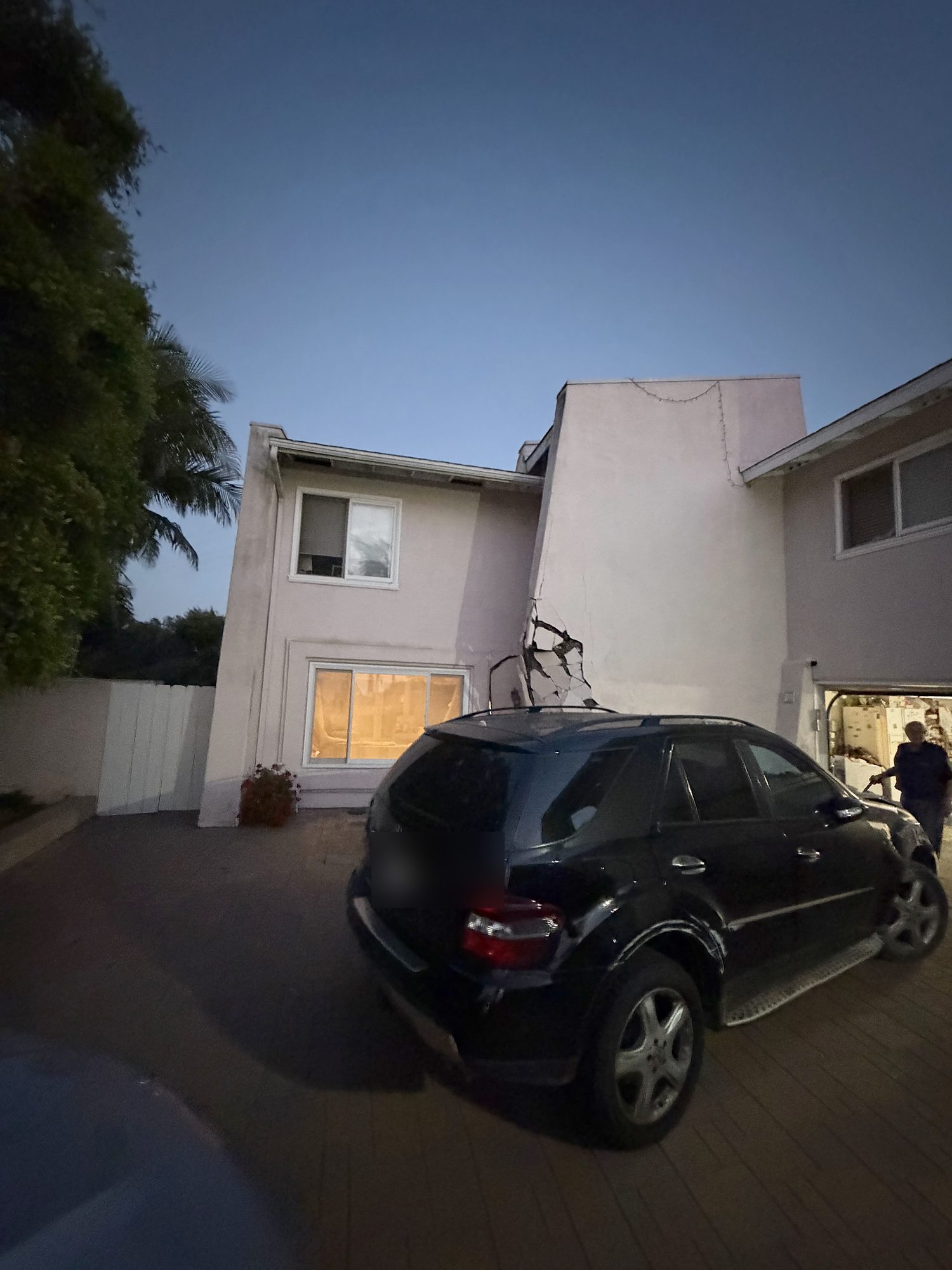
A vehicle into a building is a strange kind of loss. There is no water spreading and no smoke travelling, so it looks contained. But the structure took a large, sudden load it was never designed for, the building is now open to the street, and there is a reasonable chance the wall that was hit was holding something up.

CCR responds 24 hours a day across San Diego County. We secure and shore the structure first, then handle the assessment, the insurance coordination, and the rebuild under one contract.

Impact losses are also the one type where the money usually comes from someone else’s policy, which changes how the claim is handled from the very first day.

Get Help Now!

By submitting my data I agree to be contacted

Vehicle impact damage to a San Diego home, with a crack running up the exterior wall and the opening boarded the same evening

Securing the Building Comes First

The First Few Hours

An impact leaves the building open, and often unsafe. Our emergency response covers:

  • Board-up of the opening, self-performed by our own crews, so the property is secured against weather, animals, and trespass
  • Temporary shoring where framing or a header has been compromised and something above it needs support
  • Debris removal and making the area safe to walk
  • Photographic documentation from the first visit, before anything is moved

That documentation matters more here than in almost any other loss type, because there is likely to be a second insurer involved who was not present and will assess the claim entirely from the record.

  • Emergency board-up and opening security, self-performed
  • Temporary shoring of compromised framing and headers
  • Utility isolation and make-safe
  • Debris removal
  • Structural evaluation, with an engineer where the load path is in question
  • Full reconstruction, including framing, stucco, drywall, and finishes

One company, one contract, from the night it happens through the final walkthrough.

Utilities Are the Hidden Hazard

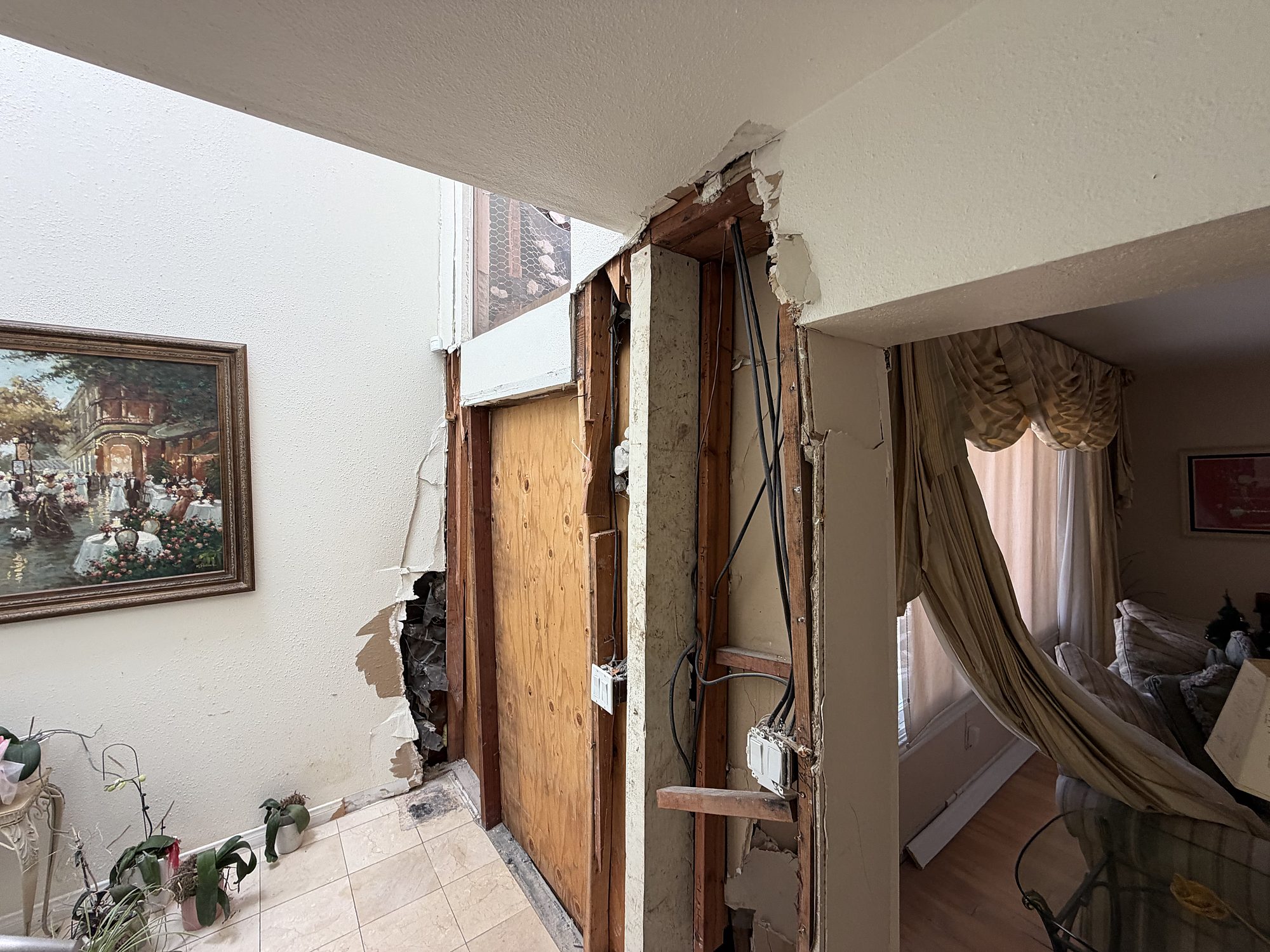
This is the part people underestimate. Exterior walls carry electrical runs, and frequently gas lines. A vehicle strike can shear both, and the damage is not always visible from inside the room.

Do not enter the impact area until utilities have been checked and made safe. If you smell gas, leave and call the utility from outside the building.

We isolate and make safe before any repair work begins, and we bring in licensed trades for gas and electrical rather than working around them.

How an impact repair runs:

Make safe – Utilities isolated, structure shored, opening secured.

Document – Photographs and a written scope from the first visit, built for an insurer who was not there.

Evaluate – Structural assessment of framing, headers, and load path, with an engineer where needed.

Rebuild – Framing, exterior envelope, and interior finishes returned to pre-loss condition.

Who Pays: The Driver’s Insurance or Yours?

Most property owners assume this goes on their own insurance. Usually it does not.

The driver’s auto liability is the primary payer. Property damage liability is exactly what that coverage exists for, and it should respond to the damage to your building.

Your own property policy becomes the payer when the driver has no insurance, has too little to cover the loss, or fled the scene. In that case you pay your deductible and your carrier pursues the driver afterward. If that recovery succeeds, your deductible often comes back to you.

Because a second insurer is usually involved, impact claims tend to move slower and depend more heavily on documentation than water or fire claims do. Getting the scope written properly and photographed from day one is what keeps them from stalling.

We work with whichever carrier ends up responsible, and we are used to claims where the paying party never set foot on the property.
Signs the damage runs deeper than the finish:

  • Doors or windows near the impact that no longer close properly
  • New cracks in drywall or stucco away from the point of contact
  • Any visible movement or separation in framing
  • Sagging above a window or door opening
  • Floors that feel different underfoot upstairs

Any of these means the assessment needs to go past the damaged wall.

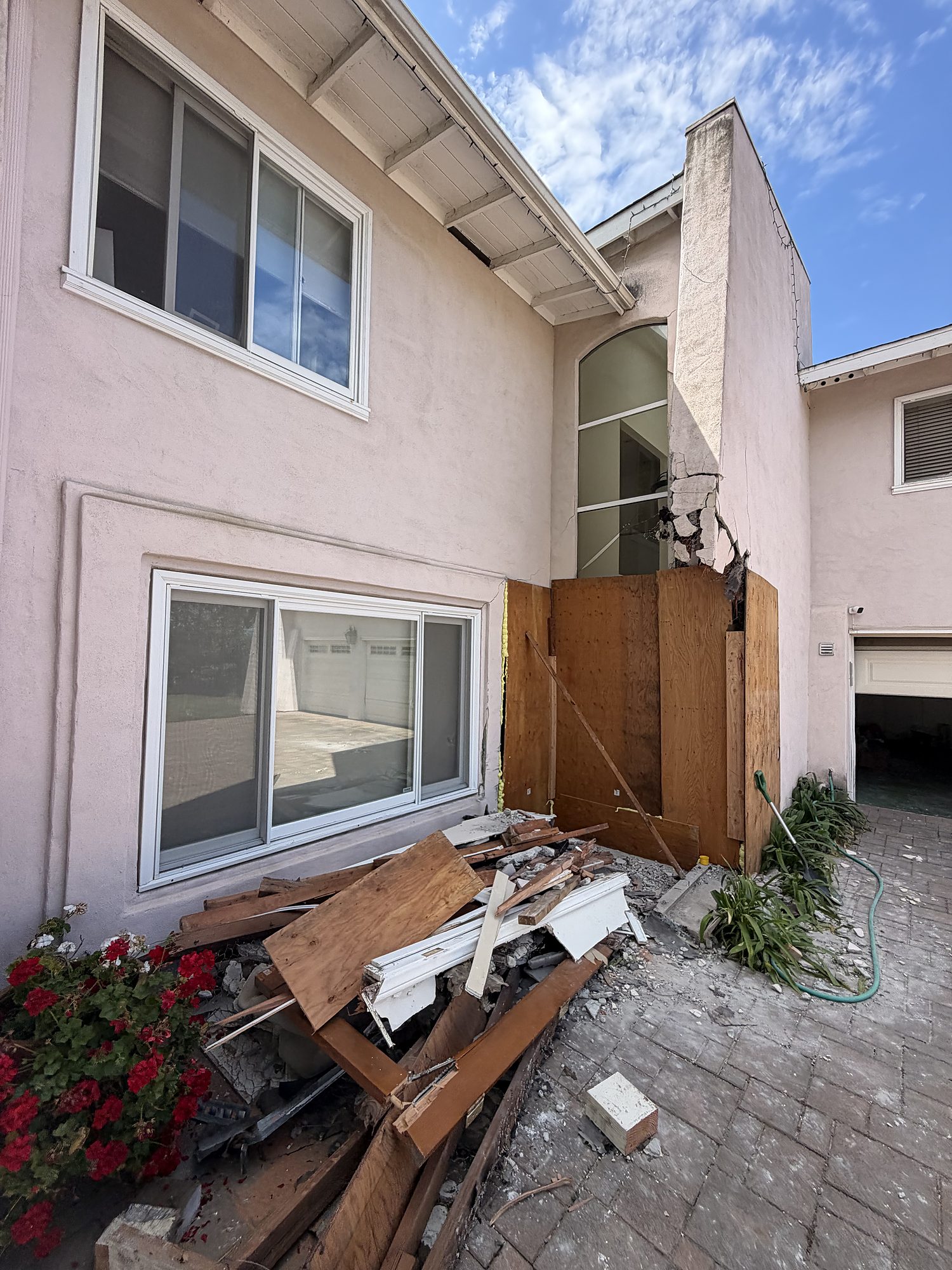
Emergency plywood board-up securing a damaged exterior wall opening at a San Diego property, with debris staged for removal
Exposed wall framing and severed electrical wiring at a vehicle impact opening in a San Diego home, boarded from outside

Structural Damage Is Usually Worse Than It Looks

What you can see is the finish. What matters is what is behind it.

A vehicle carries far more energy into a wall than any load that wall was designed for, and the damage travels. We routinely find cracked or displaced framing, compromised headers over windows and doors, and racking that shows up several feet away from the point of contact. In a two-story building, the wall that was struck may be carrying the floor above it.

Where there is any question about load path, we bring in a structural engineer rather than guess. That evaluation also protects you in the claim, because it establishes what actually has to be rebuilt instead of leaving it to argument.

24-Hour Response – Impacts happen at night and on weekends, and an open building cannot wait

Our Own Board-Up Crews – Securing the structure does not wait on a subcontractor

Structural Capability – Framing, headers, and load-bearing repairs, not just cosmetic patching

Claims Experience – Comfortable with third-party liability claims where the paying insurer never visits the property

Single Source – Emergency work and full reconstruction under one contract

An IICRC-Certified Firm – Four certified technicians on staff

Approved Vendor on 10+ Carrier Programs – We are not permitted to name them here, but adjusters know us

Top Performer & Golden Hammer Awards – Multiple-time winner, scored on service, quality, and communication

Licensed, Bonded, and Insured – California contractor’s license #813685

Commercial Storefronts and Getting Reopened

Commercial impacts are common, and they are their own problem. Storefronts sit at the end of parking stalls, drive aisles, and drive-throughs, and vehicles end up inside them regularly.

For a business, the building damage is rarely the expensive part. Being closed is. Between the property claim, the driver’s liability, and any business interruption coverage, there are often three separate conversations happening at once while the doors stay shut.

We phase commercial impact work so the unaffected parts of the space can reopen while repairs continue, and we secure storefronts in a way that is safe without looking abandoned.

Once repairs are complete, this is also the moment to ask whether bollards or wheel stops should go in. An impact at the same storefront twice is not unusual.
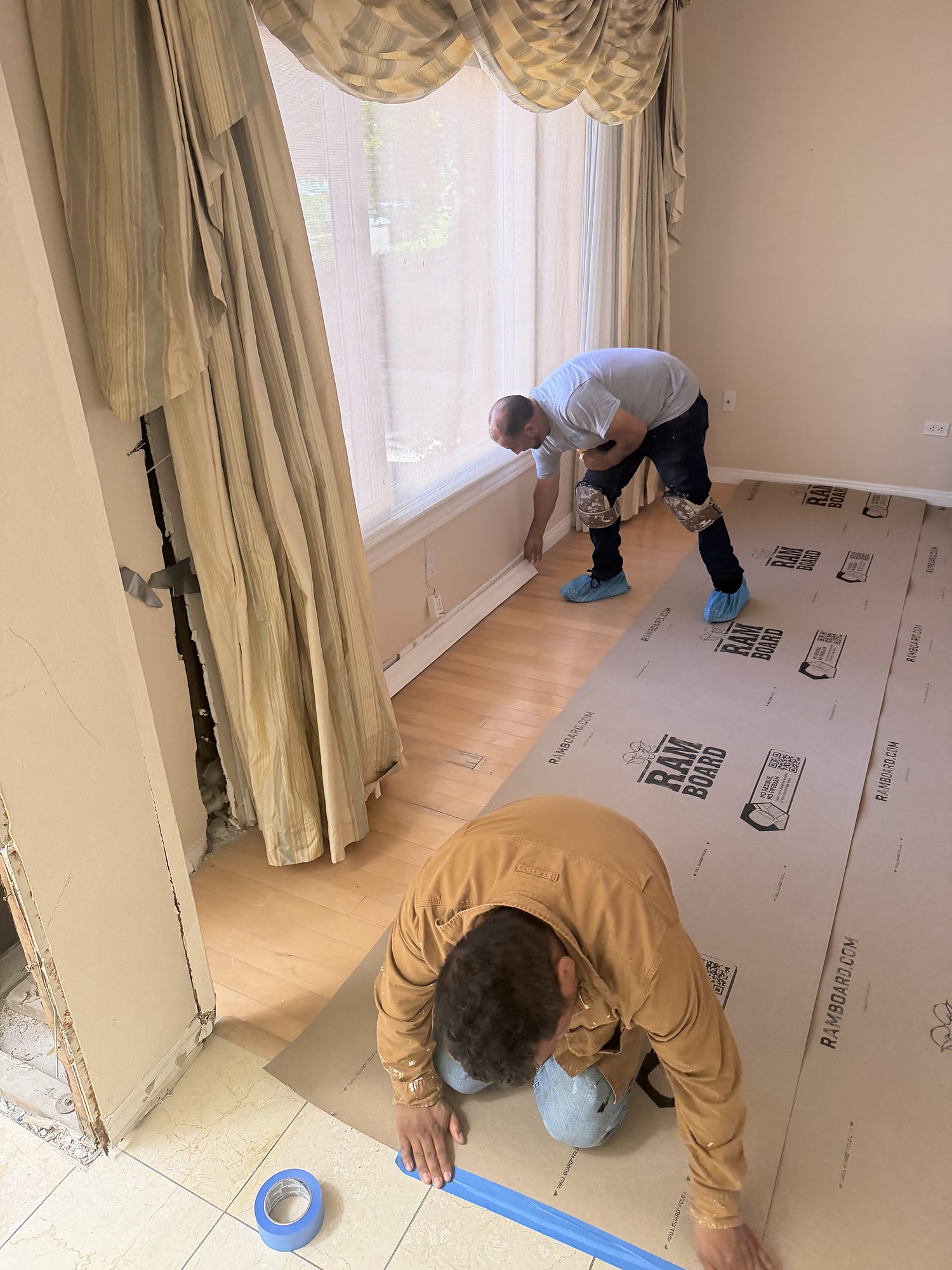
CCR technicians laying floor protection over hardwood before starting interior work in a San Diego home

Vehicle Impact Damage: Common Questions

Usually the driver’s, not yours.

The driver’s auto liability is the primary payer. Property damage liability coverage exists precisely for damage a driver causes to someone else’s property, and it should respond to your building.

Your own property policy steps in when the driver was uninsured, was underinsured for the size of the loss, or left the scene. You would pay your deductible in that case, and your carrier would pursue the driver afterward.

One correction worth making, because it confuses people: uninsured motorist property damage coverage on your auto policy protects your vehicle, not your building. A struck building is a property claim, not an auto claim.

Because when your own property policy is the one responding, its terms apply, and that includes the deductible.

What usually happens next is subrogation: your carrier pays the claim, then pursues the at-fault driver or their insurer to recover what it paid. If that recovery succeeds, your deductible is commonly returned to you.

It is worth asking your adjuster directly whether they intend to subrogate, and keeping the police report number handy, because that recovery is what gets your deductible back.

Your own property policy becomes the payer, and the process runs the same as any other property claim.

File a police report if one was not taken at the scene. Do not skip this even if the vehicle is long gone. Insurers expect it, and it matters if the driver is later identified.

Photograph everything before it is moved, including debris, tire marks, and any part of the vehicle left behind. Vehicle parts are more useful than people expect.

Assume not until it has been checked.

Exterior walls carry electrical, and often gas. A strike can shear either one without the damage being obvious from inside the room. If you smell gas, leave and call the utility from outside.

Structurally, the wall that was hit may be carrying load from above. Doors that suddenly will not close, new cracks away from the impact, or sagging over an opening all suggest the damage travelled.

We make utilities safe and shore anything questionable before work starts, and we bring in an engineer where the load path is in doubt.

We respond 24 hours a day, and securing the building is the first thing done on site.

Board-up is self-performed by our own crews rather than subcontracted, which matters at 2am when the building is open to the street. Where framing or a header has been compromised, we shore it at the same visit rather than boarding over a structural problem.

Faster than the full repair, usually, because the two do not have to finish together.

We phase commercial impact work so unaffected parts of the space can reopen while repairs continue behind containment. For most businesses, being closed costs more than the building damage does, so reopening is treated as its own objective rather than a byproduct of finishing the job.

If you carry business interruption coverage, that is a third conversation running alongside the property claim and the driver’s liability. It is usually time-limited, which is another reason reopening quickly protects the claim.

That is the part people worry about, and reasonably so, because impact repairs are almost always to a visible exterior elevation.

Stucco texture, paint, and finish matching are where an impact repair is judged. We scope for that from the start rather than treating it as touch-up at the end, and where an exact match is not achievable on a patch, we say so up front and price the larger area instead of leaving you with a visible rectangle.

Often, yes, and the moment to deal with it is during the rebuild rather than after.

Bollards, wheel stops, raised curbing, or landscape boulders can all take the hit instead of the building, and installing them while the area is already open and under construction costs far less than doing it as its own project later.

This matters most where the geometry caused the problem: a parking stall aimed at the building, a drive aisle that ends at a wall, or a corner where drivers cut through. A second impact at the same storefront is more common than you would expect.


Contact CCR for Vehicle Impact Repair in San Diego

If a vehicle has struck your home or building, the priorities are getting people clear, getting the utilities made safe, and getting the structure secured. Call CCR Construction at 858-397-2270 for 24-hour emergency response anywhere in San Diego County.

We will secure and shore the building, document the loss properly for whichever insurer ends up paying, and rebuild it, with one team from the first call through the final walkthrough.

Get Help Now!

By submitting my data I agree to be contacted