
Insurance Reconstruction & Repairs in San Diego
Reconstruction is the majority of what we do. Roughly nine out of ten dollars CCR earns comes from putting buildings back together, not from the emergency work that precedes it.
That matters to you for one specific reason. Most restoration companies dry the building, clean it, and hand you a referral to a general contractor. That handoff is where projects stall, where scope gets lost between two companies, and where nobody is accountable for the finished result.
We do both halves. The crew that shows up the night of the loss belongs to the same company that hands the building back to you finished.
First insurance claim? Here is how the claims process works, from the day you find the damage to the day the warranty starts.
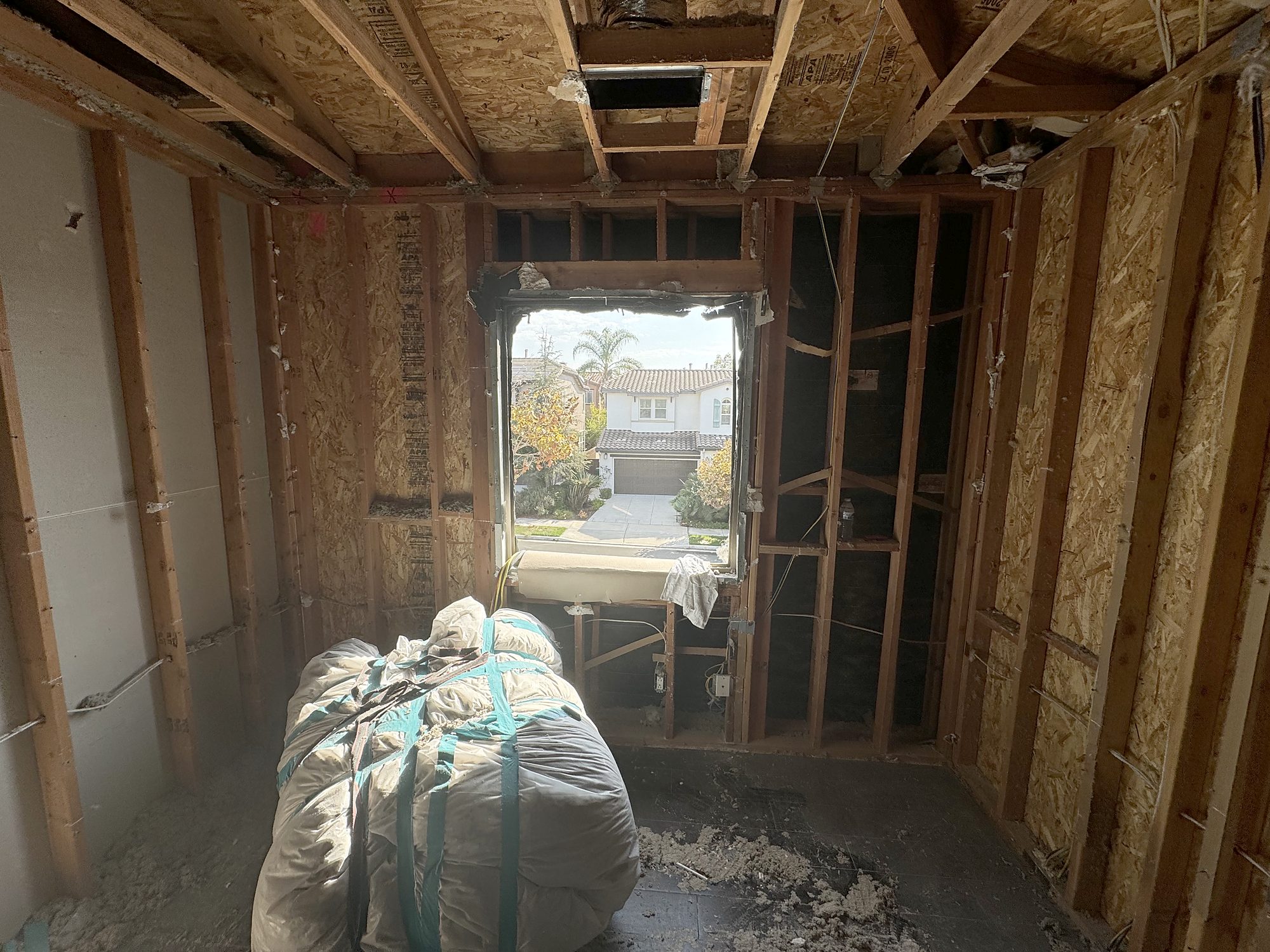
Mitigation and Rebuild Under One Contract
Why the Handoff Costs You
When mitigation and reconstruction are two different companies, three things reliably go wrong.
Scope falls through the gap. The mitigation company documents what they removed. The contractor estimates what they will rebuild. Anything neither one clearly owns becomes an argument later, usually with you in the middle.
Time is lost twice. You wait for the mitigation company to finish, then you start over finding, scheduling, and contracting a builder, often at the back of their queue.
Accountability disappears. If something does not match or does not work, each company can point at the other.
Under one contract, the demolition is done by people who already know what is going back in.
Licensed, bonded, and insured. California contractor’s license #813685.
What Reconstruction Covers
- Framing, structural repairs, and load-bearing work
- Roofing and truss replacement, exterior envelope, stucco and siding
- Drywall, texture, paint, and finish carpentry
- Kitchens, bathrooms, cabinetry, countertops, and tile
- Flooring across all substrates
- Electrical, plumbing, and HVAC through licensed trades we manage
- Commercial tenant improvements and buildouts
Whether the loss was water, fire, storm, or a vehicle through the wall, the rebuild is the same discipline.
How an Insurance Rebuild Actually Gets Paid
This is the part almost nobody explains, and it is the reason people feel misled by their own insurance.
Most policies pay replacement cost value, but they do not pay it all at once. The carrier first issues actual cash value, the replacement cost minus depreciation for age and wear. The difference is held back as recoverable depreciation, and it is released only after the work is actually completed and invoiced.
So the first check is deliberately short. It is not a lowball and it is not the settlement. It is a partial payment with the balance conditional on the repairs being done.
Two consequences worth understanding. If you pocket the first check and do not rebuild, you forfeit the recoverable depreciation. And if your property carries a mortgage, your lender is usually named on the check and will release funds in stages as work is inspected.
We invoice in a way that supports the depreciation release, because getting that second payment issued is part of the job.
Supplements: What Happens When the Damage Is Worse Than the Scope
A scope written before demolition is a scope written blind.
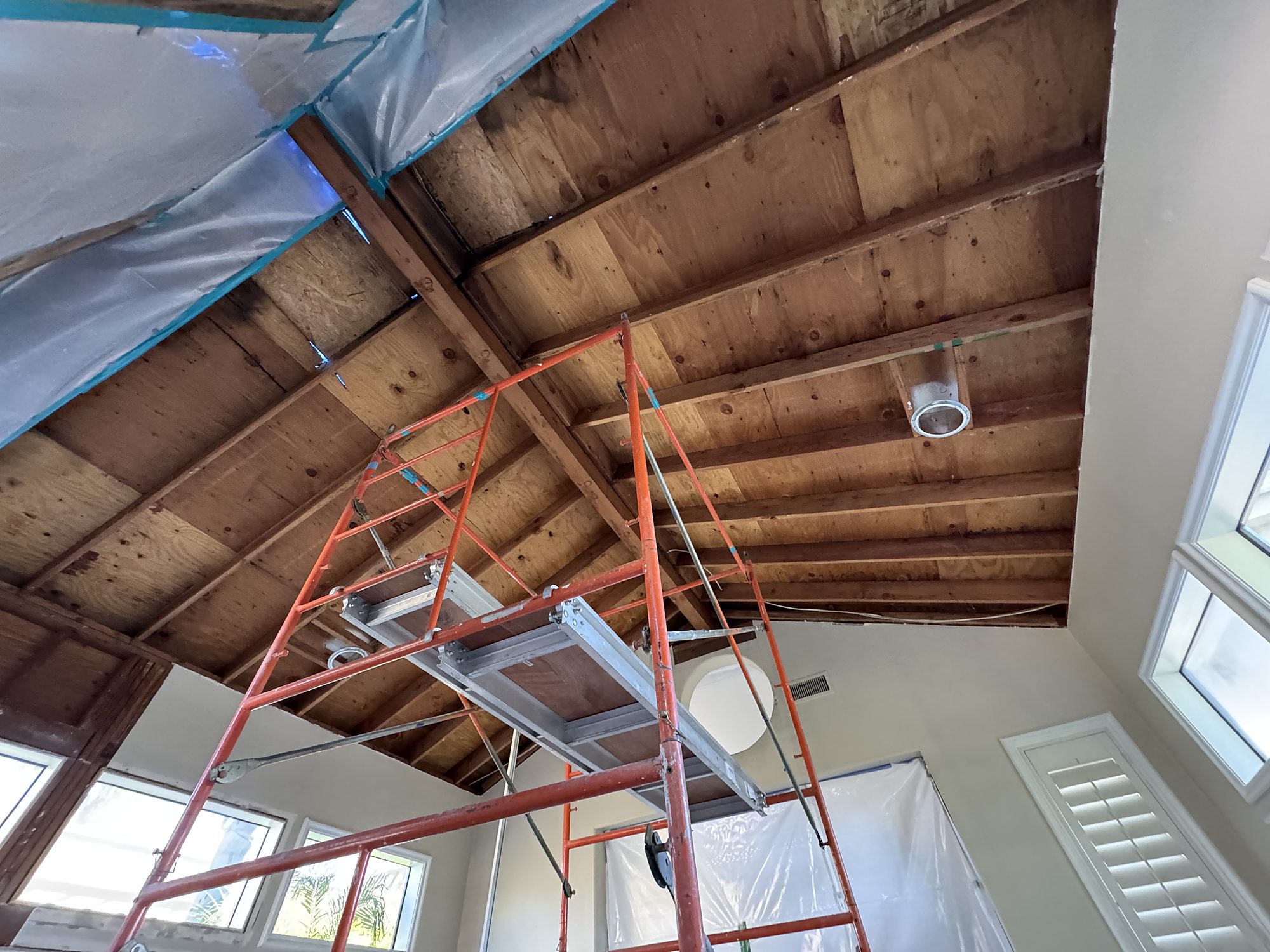
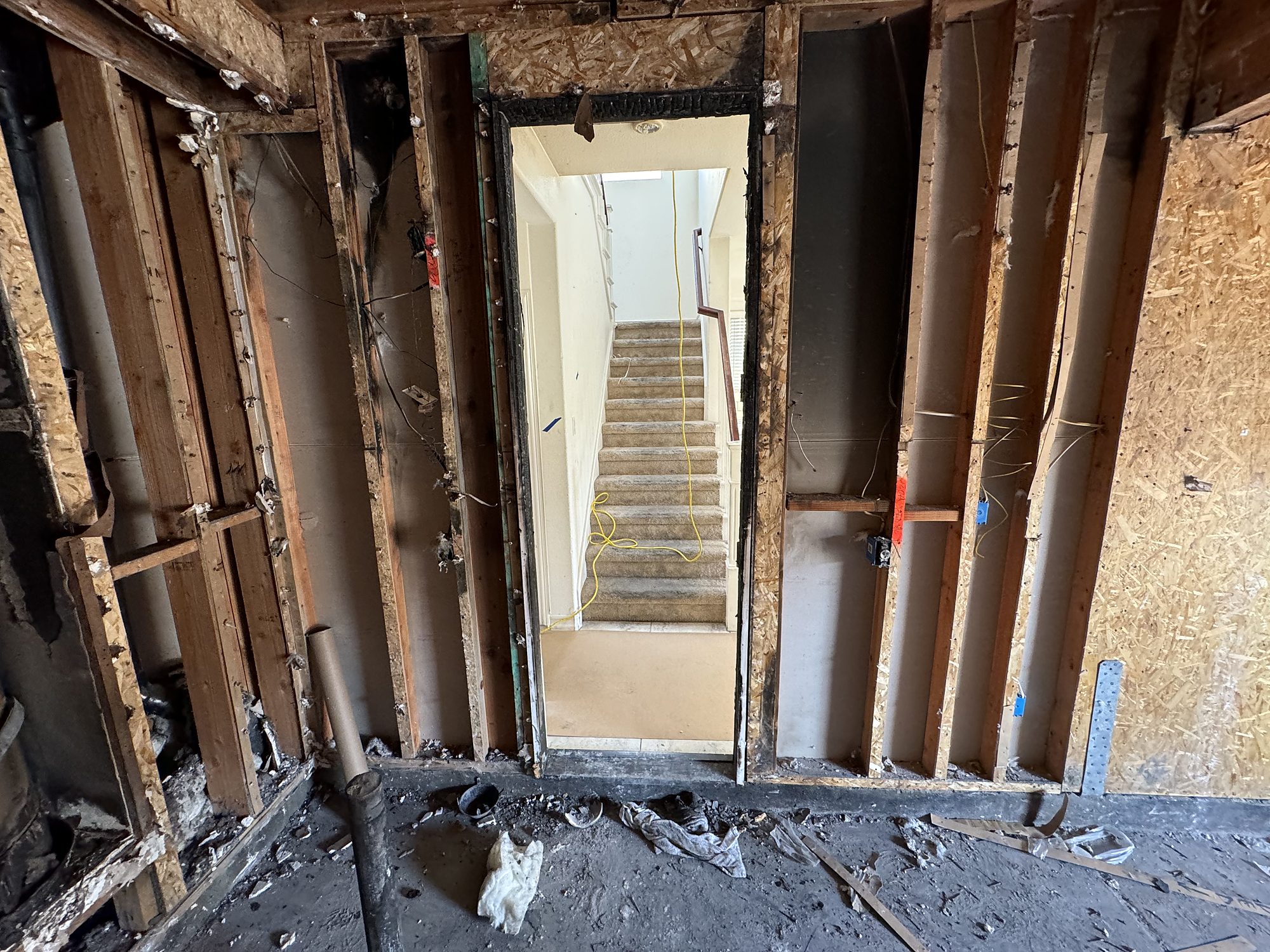
The estimate your adjuster approves is based on what could be seen. Once walls open, we routinely find damage that was not visible: water that travelled further than the staining showed, charring inside a wall cavity, compromised framing, or failed materials behind a finish.
When that happens, the work needs a supplement, a documented request to expand the approved scope and budget before proceeding. This is normal and expected on any real loss. It is also where jobs stall, because a supplement submitted with thin documentation gets questioned, and the building sits.
We photograph and document conditions as they are uncovered and submit supplements in the format adjusters expect. That is the difference between a two-week pause and a two-day one.
Code Upgrades and the Matching Problem
Code Upgrades
Buildings are repaired to today’s code, not the code that existed when they were built. On an older San Diego property that can mean electrical, egress, insulation, or structural requirements the original building never had to meet.
Standard policies generally cover restoring what was there, not upgrading it. Coverage for the difference comes from ordinance or law coverage, which many policies include at a limited percentage and some exclude entirely. It is worth knowing which you have before the rebuild starts rather than discovering it mid-project.
The Matching Problem
Damage stops at a line. Finishes do not.
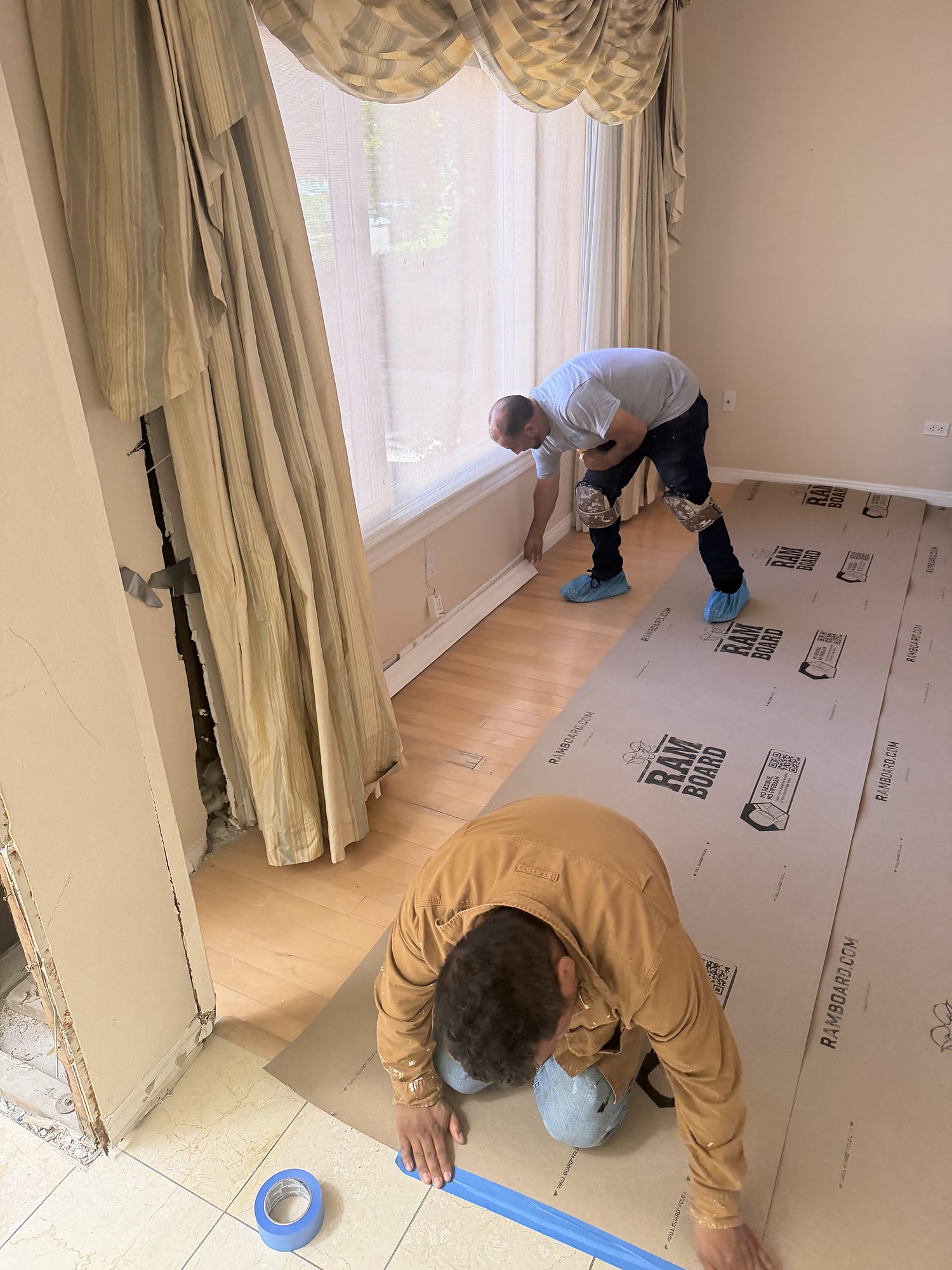
If flooring runs continuously from the damaged room into two undamaged ones, replacing only the damaged section leaves a visible seam and a mismatch. Carriers and policyholders disagree about this constantly, and outcomes vary by policy language and by how the request is documented.
We document continuous surfaces and line of sight explicitly when scoping, because a matching argument made at the start with photographs is far more likely to succeed than one made at the end with frustration.
Insurance Reconstruction: Common Questions
Contact CCR for Reconstruction in San Diego
If your property needs to be rebuilt after a loss, the useful conversation starts with the scope, not the schedule. Call CCR Construction at 858-397-2270 to talk through what your carrier has approved and what it will actually take.
We handle mitigation and reconstruction under one contract, work directly with your carrier, and stay accountable for the finished result, because we are the ones who finish it.